

Drip Irrigation vs. Misting Lines: Choosing the Right System for What You Grow
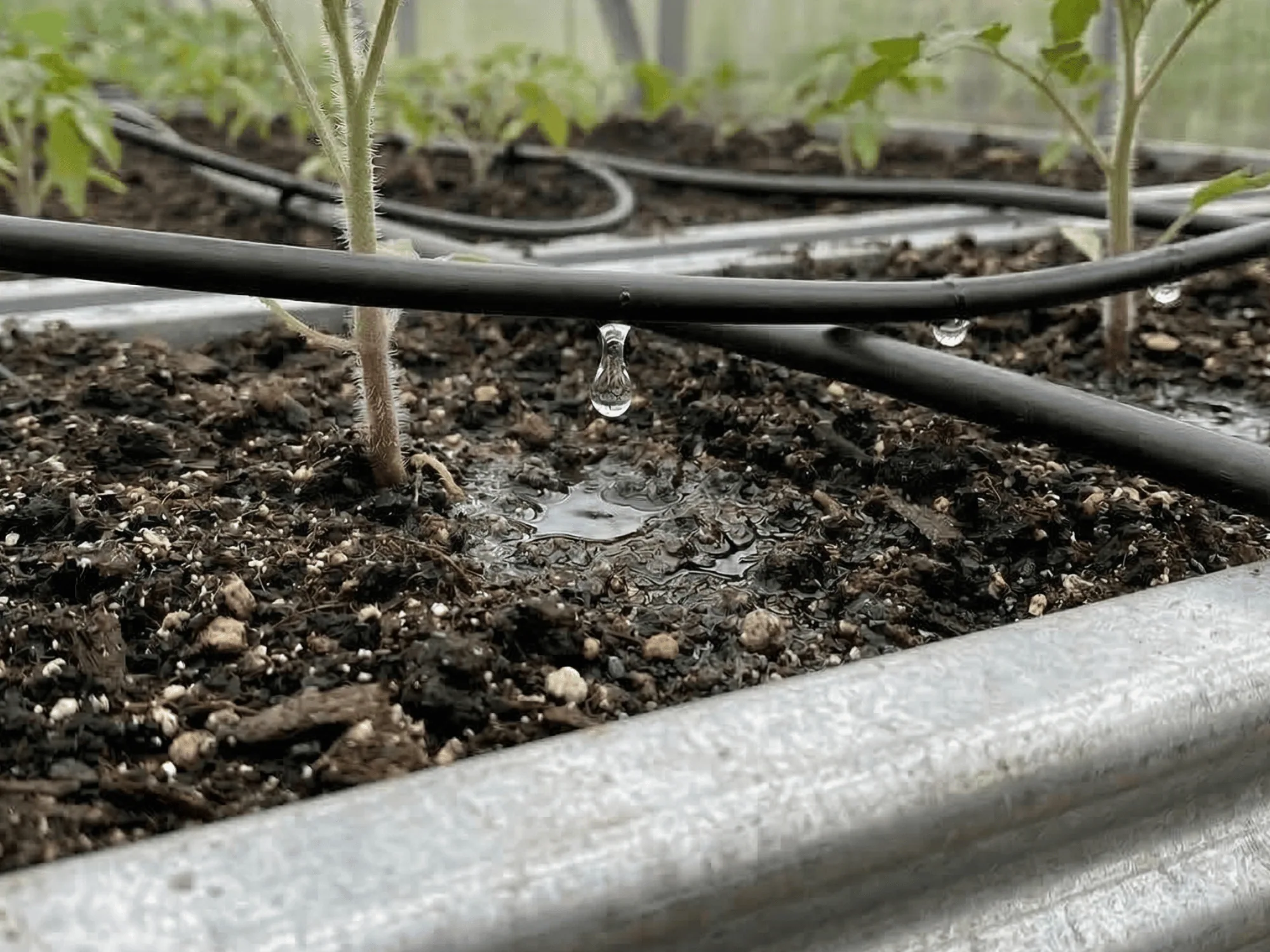
Drip goes to the roots, misting cools the air and keeps humidity up. Both have their place depending on your crops and climate.
The choice between drip irrigation and misting lines is not really a competition — they solve different problems. Drip is a water delivery system. Misting is an environment management system. Some greenhouse operations need one, some need the other, and some need both running independently for different purposes. Understanding what each one actually does makes the decision straightforward.
What drip irrigation does
A drip system delivers water slowly and directly to the root zone of individual plants through emitters — small fittings attached to a supply line that release water at a controlled rate, typically measured in gallons per hour rather than gallons per minute. The water goes into the soil or growing media at the base of the plant, soaks down to where the roots are, and very little of it ends up anywhere else.
This precision is the main reason drip is the default choice for most greenhouse food crops. Tomatoes, cucumbers, peppers, herbs, lettuce — anything grown in defined beds or containers benefits from water delivered exactly where it is needed, consistently, without wetting foliage or creating surface moisture between plants. Wet foliage and standing surface water are two of the primary conditions that encourage fungal disease, and drip avoids both entirely.
Water efficiency is the other advantage. Drip systems use significantly less water than overhead watering methods because there is almost no evaporation loss during delivery and no overspray beyond the root zone. In a commercial operation running through the summer, that difference adds up fast.
What misting does
A misting line releases water as a very fine spray — droplets small enough that a significant portion evaporates before hitting any surface. That evaporation is the point. As the water changes from liquid to vapour it absorbs heat from the surrounding air, which lowers the air temperature in the immediate area. At the same time, the water vapour that remains raises the relative humidity of the space.
Misting is not primarily a watering system. It is a climate tool. Growers use it for two main reasons: to cool the interior of the greenhouse during hot weather when ventilation alone is not enough, and to maintain the elevated humidity levels that certain crops require throughout their growth cycle.
Propagation is the most common high-humidity application. Unrooted cuttings and freshly sown seeds need to stay moist at the surface while they establish, but they do not yet have a root system capable of taking up water from the media. Misting keeps the air around them saturated so they do not desiccate before they can root. Orchids, ferns, tropical foliage, and similar crops that naturally grow in humid environments also benefit from misting as an ongoing part of their growing conditions rather than just during propagation.
Misting is not a substitute for irrigation. Even crops that need high ambient humidity still need water delivered to their roots. A misting system that keeps the air at 85% relative humidity is not watering your plants — it is managing the environment around them. In most setups, misting and drip run on separate lines, on separate timers, for separate purposes.
When drip is the right choice
Established vegetable and fruit crops:
Any crop with a developed root system that is growing in defined media — beds, bags, containers, or ground soil — is well served by drip. Tomatoes, cucumbers, peppers, melons, and leafy greens all fall into this category. The emitters deliver water consistently to each plant at a rate the media can absorb without runoff, and the dry foliage and dry surfaces between plants keep disease pressure lower than any overhead system would.
Operations where water efficiency matters:
If you are on a well, a cistern, or paying for municipal water at volume, drip delivers more of your water to where it is actually used. The efficiency advantage over overhead watering is significant enough that drip often pays for itself in water savings alone over a season or two in a commercial operation.
Crops sensitive to foliar moisture:
Some crops — tomatoes in particular — are prone to fungal issues when foliage stays wet. Overhead watering in a greenhouse where ventilation is limited makes this worse. Drip keeps the leaves dry regardless of how often you water and removes one of the main environmental triggers for disease.
When misting makes sense
Propagation benches:
This is the highest-return application for misting in most greenhouse operations. A misting line on an interval timer over a propagation bench keeps cuttings and seedlings in the humid conditions they need to root and establish without requiring constant manual attention. Pair it with a soil heating cable underneath and you have a propagation environment that covers both the air and root zone conditions that drive establishment speed.
Hot climate cooling:
In regions where summer temperatures push well above what ventilation fans can manage on their own, a misting system running at peak heat provides meaningful temperature relief. The evaporative cooling effect is most pronounced when outdoor humidity is low — in dry climates a misting system can drop interior temperatures by 10 degrees or more. In already-humid climates the cooling effect is reduced because the air has less capacity to absorb additional vapour.
Humidity-dependent crops:
Orchids, ferns, certain mushroom varieties, and tropical foliage crops have genuine ongoing humidity requirements. A misting system on a humidistat — triggering when relative humidity drops below a setpoint — is a cleaner and more reliable way to meet those requirements than manual misting or relying on ambient greenhouse humidity.
Running both systems together
In a lot of commercial greenhouse setups, drip and misting coexist without interfering with each other. Drip lines run at ground level to the base of established crops on a watering schedule tied to crop demand and season. Misting lines run overhead on a separate circuit, either on a timer during the hottest part of the day or triggered by a humidistat for humidity-sensitive areas like propagation benches.
The key is keeping them on independent controls. Misting during a drip cycle — or running both at the same time without intent — wastes water and can create overly wet conditions at the surface. Treat them as separate tools for separate jobs, schedule them independently, and they work well alongside each other in the same structure.