Air Inflation Pumps: What They Do and Why Double-Layer Poly Is Necessary
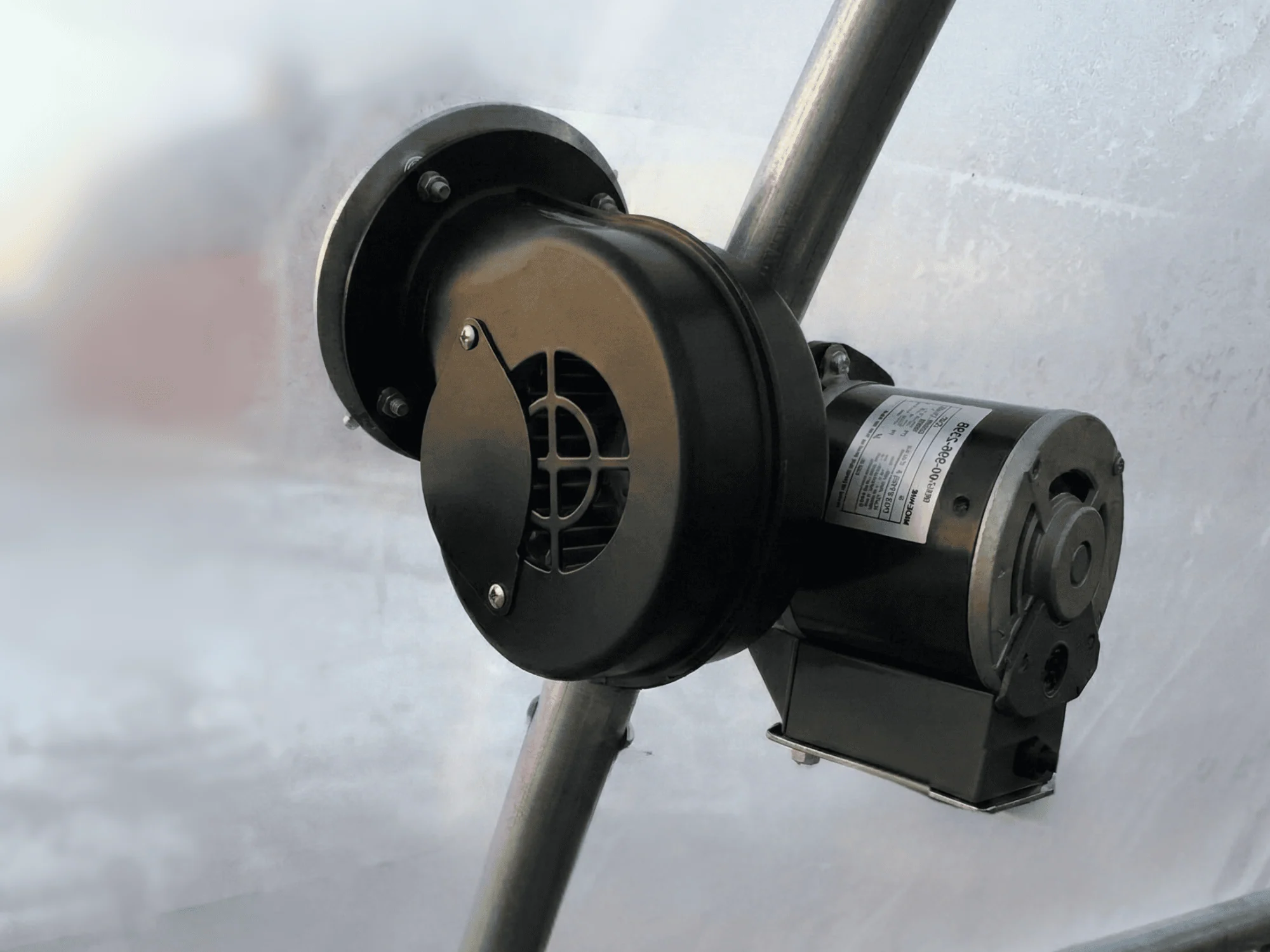
Single-layer poly lets heat escape fast. A second layer with pressurized air in between changes the insulation equation entirely. Here is how the pump keeps that system working and why it matters for cold-climate growing.
If you have ever touched the inside wall of a greenhouse on a cold night with a single layer of poly, you already understand the problem. The film gets cold fast, heat conducts straight through it, and your heating system runs harder than it should to make up the difference. The crop stays warm enough, but at a cost.
Double-layer poly with an inflation pump is the standard fix for this in commercial tunnel growing. The concept is straightforward, but there are a few things worth understanding about how the system actually works before you set one up — especially around what the pump is doing and why getting it right matters.
What is actually happening between the two layers
A double-layer poly system installs two separate sheets of poly film over the greenhouse frame with a small air gap between them — typically somewhere in the range of 1 to 2 inches when pressurized. That air gap is the insulation. Still air is a poor conductor of heat, so trapping a consistent layer of it between the two poly sheets slows down the rate at which heat moves from the interior of the greenhouse to the outside.
The improvement is meaningful. A single layer of 6-mil poly has minimal insulating value on its own. Adding a second layer with an air gap roughly doubles the thermal resistance of the covering. In practical terms, that means lower heating costs during cold months and a more stable interior temperature when outdoor temperatures swing overnight.
But the air gap does not maintain itself. Poly film is flexible — without something actively holding the two sheets apart, they collapse against each other and you are back to a single layer of coverage with none of the insulation benefit. That is the job of the inflation pump.
What the pump does
The inflation pump — sometimes called an inflation blower or poly inflator — is a small, continuously running fan that pushes a low volume of air into the sealed space between the two poly layers. It does not pressurize the space to any significant degree. The goal is not pressure; it is volume. The pump simply keeps enough air moving into the gap to hold the outer layer away from the inner one at all times, maintaining the insulating air cushion even when wind load pushes against the outside of the structure.
The system is sealed at the edges using the same wiggle-wire channel system that holds the poly to the frame. The inner layer is attached first, then the outer layer goes on with the pump inlet fitted into a grommet or port between the two. Once both layers are locked in and the pump is running, the gap inflates within minutes and stays that way as long as the pump is operating.
One thing to keep in mind: the pump needs to run continuously during the heating season. It draws very little power — comparable to a small household fan — but it should not be on a timer or a thermostat. If it shuts off, the layers collapse, and you lose the insulation value at exactly the moments it matters most: cold nights and early mornings.
Why you cannot skip the second layer
This comes up occasionally — the question of whether you can just run an inflation pump against the single poly layer that is already on the structure and get some benefit from the airflow. You cannot, and the reason is straightforward: the pump is not generating warm air. It is moving ambient air, which in winter may be cold. Without a sealed outer layer trapping that air, there is nothing to insulate and the airflow will actually accelerate heat loss rather than reduce it.
The insulation value comes entirely from the still, trapped air between the two sealed layers. The pump is there to maintain the gap, not to produce warmth. Both sheets of poly are required for the system to do anything useful.
Sizing the pump to the structure
Pump sizing is based on the volume of the air gap relative to the tunnel dimensions. A pump that is too small will struggle to maintain the gap under wind load and may allow the layers to contact each other in sections, creating cold spots in the cover. A pump that is significantly oversized is not a problem on its own, but it adds unnecessary noise and draws more power than needed.
For a 30-foot-wide tunnel in the standard 50-foot or 100-foot lengths, a pump in the range of 50 to 115 CFM is the typical working range depending on length. Longer structures and those in windier locations generally need more airflow to hold the gap consistently. When in doubt, sizing up slightly is the more conservative choice — a little extra airflow capacity costs very little in operating power and gives you margin when conditions get rough.
Condensation between the layers
One practical side effect of double-layer poly worth knowing about is condensation. Humid air from inside the greenhouse can migrate through or around the inner layer and come into contact with the cooler outer layer, where it condenses. Over time this can collect in the lower sections of the gap and sit against the frame or channel system.
This is not a reason to avoid double-layer poly — it is a normal characteristic of the system. Good drainage at the base of the tunnel and keeping the lower edges of the gap properly sealed minimizes pooling. Some growers add a small amount of winterizing solution to the air gap to reduce condensation; others simply manage it as part of seasonal maintenance. The key is not to ignore it, because standing moisture against metal components over time will accelerate corrosion.
When double-layer poly is worth it
If you are growing through winter in a climate where nighttime temperatures drop well below freezing, double-layer poly with an inflation pump will almost certainly pay for itself in reduced heating costs over a season or two. The math depends on your fuel source and how many heating degree days your location sees, but the insulation improvement is consistent and the equipment involved is simple and inexpensive relative to the energy savings.
If you are in a mild climate and only running the tunnel through shoulder seasons, the calculation is different. The insulation benefit is real at any temperature differential, but the payback period extends when you are not running a heater hard on cold nights. For those operations, double-layer poly is still a good system — it also reduces condensation drip onto crops and helps stabilize daytime temperatures — but the primary driver of the decision is usually how cold your winters actually get.
For cold-climate operations, it is one of the higher-return additions you can make to a standard tunnel setup. The pump runs quietly in the background, the second layer goes on the same way as the first, and the difference in heating performance over a full winter season is significant.