How to Extend Your Growing Season by 6 to 8 Weeks With a Greenhouse
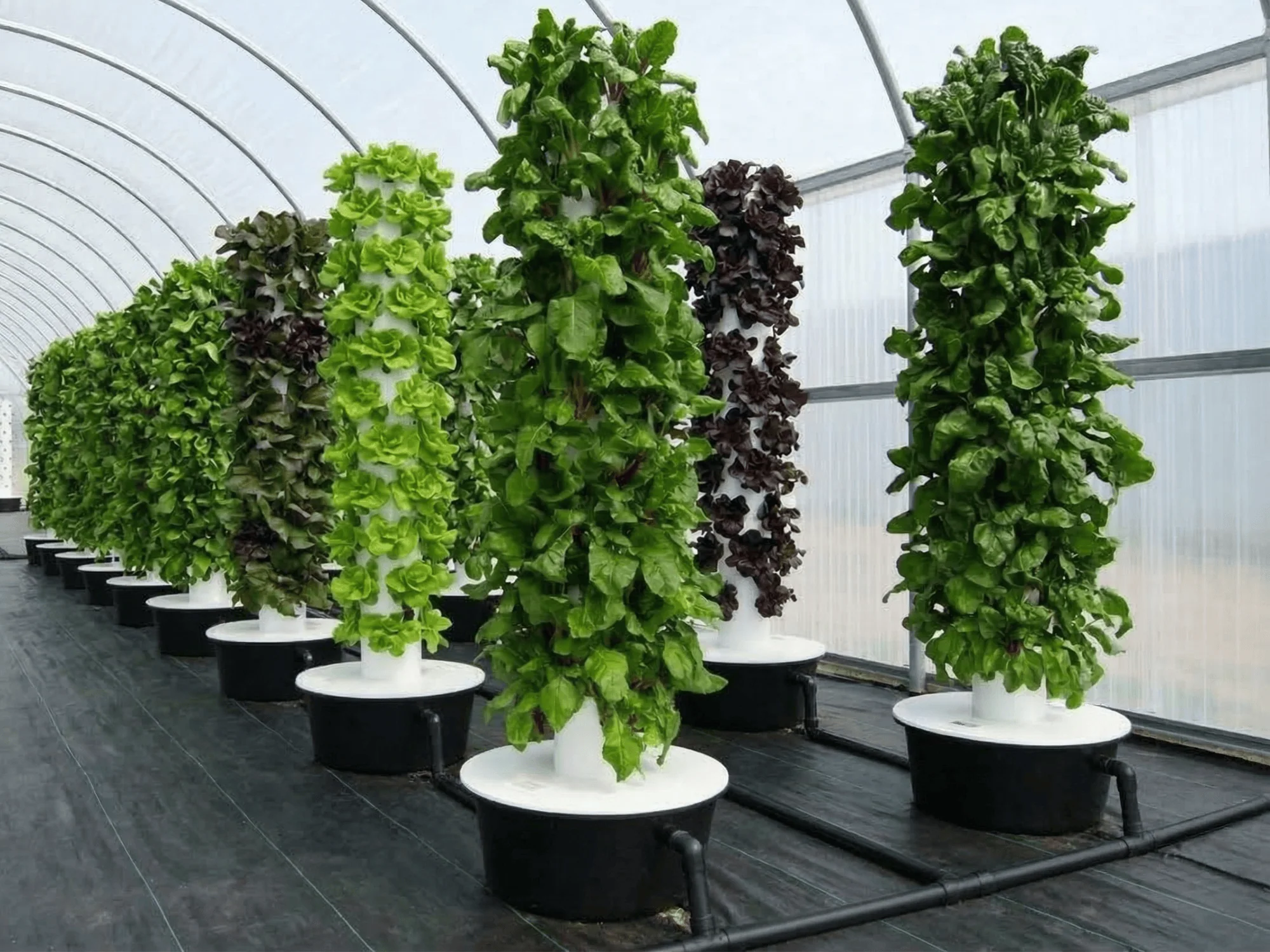
A few simple adjustments to your setup can push your first and last harvests well beyond what the outdoor calendar allows. Here is how to make the most of that window.
The value of a greenhouse is not just that it grows things — it is that it grows things when the field cannot. In most Northern climates, the difference between an open-field season and a managed-tunnel season is six to eight weeks on each end: a few weeks earlier in spring, a few weeks later in fall. For a market grower, that window is often where the margin is. Early-season produce sells before anyone else has it, and late-season produce sells after everyone else has stopped.
The good news is that capturing those weeks does not require a fully automated glasshouse. It requires understanding where the limits actually are — soil temperature in spring, heat retention in fall, and the daily temperature swing throughout — and making a few targeted adjustments. Here is how the weeks add up.
Why a greenhouse buys you time on both ends
A greenhouse extends the season through two distinct mechanisms, and they work at opposite ends of the calendar. In spring, the structure traps incoming solar radiation and warms the soil and air faster than the open field, letting you start crops while the outdoor ground is still cold and wet. In fall, the same structure slows the loss of accumulated heat, holding the growing environment above the killing frosts that end the outdoor season.
The limiting factor is different at each end. In spring, it is almost always soil temperature, not air temperature — seeds and transplants stall in cold soil regardless of how warm the air gets at midday. In fall, it is overnight heat retention — a single hard frost ends everything, so the question is whether the structure can hold enough warmth through the coldest hours to keep tender crops alive. Address both and the season stretches at both ends.
Starting earlier in spring
The single biggest lever in spring is soil temperature. Most warm-season crops will not germinate or establish until soil reaches roughly 15°C, and cold soil keeps roots dormant even when the greenhouse air is comfortable by lunchtime. Warming the root zone directly is far more effective than trying to heat the whole volume of air above it.
Soil heating cables run through propagation beds or under the growing rows raise root-zone temperature precisely where it matters, on a fraction of the energy a space heater would draw. Paired with a thermostat that holds the soil at a target temperature, they let you start heat-loving transplants — tomatoes, peppers, cucumbers — weeks before the soil would warm on its own. For direct-sown crops, warm soil means faster, more even germination and a head start that carries through the whole season.
Starting transplants under cover is the other half of the spring equation. A propagation area inside the tunnel — ideally with bottom heat — lets you raise seedlings to transplant size while it is still freezing outside, so that the moment the beds are workable you are setting out established plants rather than sowing seed. That alone can move your first harvest forward by three or four weeks.
Heat the soil, not the air. In spring, root-zone temperature is the constraint, and warming it directly with heating cables on a thermostat is dramatically more energy-efficient than trying to lift the air temperature of the whole structure. Plants respond to warm roots even when the surrounding air is still cool.
Pushing later into fall
The fall extension is a heat-retention problem. Through the day the greenhouse gathers more than enough warmth; the challenge is holding it through the night against the first frosts. The most effective single upgrade here is a second layer of poly with an air gap between the two films, inflated by a small blower. That trapped air pocket acts as insulation and can cut overnight heat loss substantially compared to a single layer — often enough to hold several degrees of frost protection without any supplemental heat at all.
Inside the tunnel, a layer of floating row cover draped directly over the crop adds another few degrees of protection on the coldest nights, creating a microclimate within the microclimate. For the marginal nights at the very edge of the season — the ones that would otherwise end your tomatoes — that combination of double poly and an inner row cover is frequently the difference between a killed crop and another two weeks of harvest.
When the structure alone is not enough, a thermostatically controlled heater set to kick on only below a frost threshold protects the crop on the handful of genuinely cold nights without running constantly. The goal in fall is rarely to keep the greenhouse warm — it is simply to keep it above freezing through the coldest hours, which takes far less energy than maintaining a growing temperature.
Managing the daily temperature swing
The trap that catches new growers is the daily swing. A sealed greenhouse on a sunny spring day can climb past 40°C by noon and then crash toward freezing overnight, and that whiplash stresses plants as much as steady cold would. Extending the season is as much about damping the swing as it is about adding heat.
Venting is the daytime half: automatic vent openers or thermostatically controlled exhaust fans bleed off excess heat before it cooks the crop, with no one needing to be on site to crack a door at the right moment. Thermal mass is the overnight half: barrels of water or a concrete or stone floor inside the tunnel absorb surplus heat during the day and release it slowly after dark, flattening the overnight low. Together they turn a structure that overheats by day and freezes by night into one that holds a workable range around the clock — which is what actually keeps shoulder-season crops productive.
Automate the venting before you automate anything else. The fastest way to lose an early-season crop is not frost — it is a sunny day with the greenhouse sealed shut while no one is there to open it. A simple thermostatic vent or fan removes that risk and protects the head start you worked to build.
Choosing crops that reward the extra weeks
Not every crop is worth pushing to the edges of the season. The ones that pay off are those that command a premium when they are scarce. Early salad greens, radishes, spinach, and brassicas tolerate cool conditions and reach market weeks before field crops, while a late planting of the same cool-season greens carries production well into the fall after outdoor supply has dried up.
At the warm end, the extension is about ripening rather than starting: getting tomatoes, peppers, and cucumbers planted early enough that they are in full production through the long middle of the season, then protecting them at the back end to ripen the last of the fruit that would otherwise be lost to frost on the vine. Matching the crop to the kind of extension the structure provides — cool-tolerant greens at the cold edges, fruiting crops protected through the warm core — is what turns six to eight extra weeks of growing environment into six to eight extra weeks of actual harvest.
The weeks add up
None of these adjustments is dramatic on its own. Warm soil moves your start forward a few weeks. A propagation area gets transplants out earlier. Double poly and row cover hold off the first frosts. Venting and thermal mass keep the swing in a workable range so the crop stays productive through the shoulders. Stacked together, they reliably turn the open-field calendar into something six to eight weeks longer on each end — and in a market garden, that extended window is very often where the season actually becomes profitable.