Hoop Tunnel vs. High Tunnel: What Is Actually the Difference?
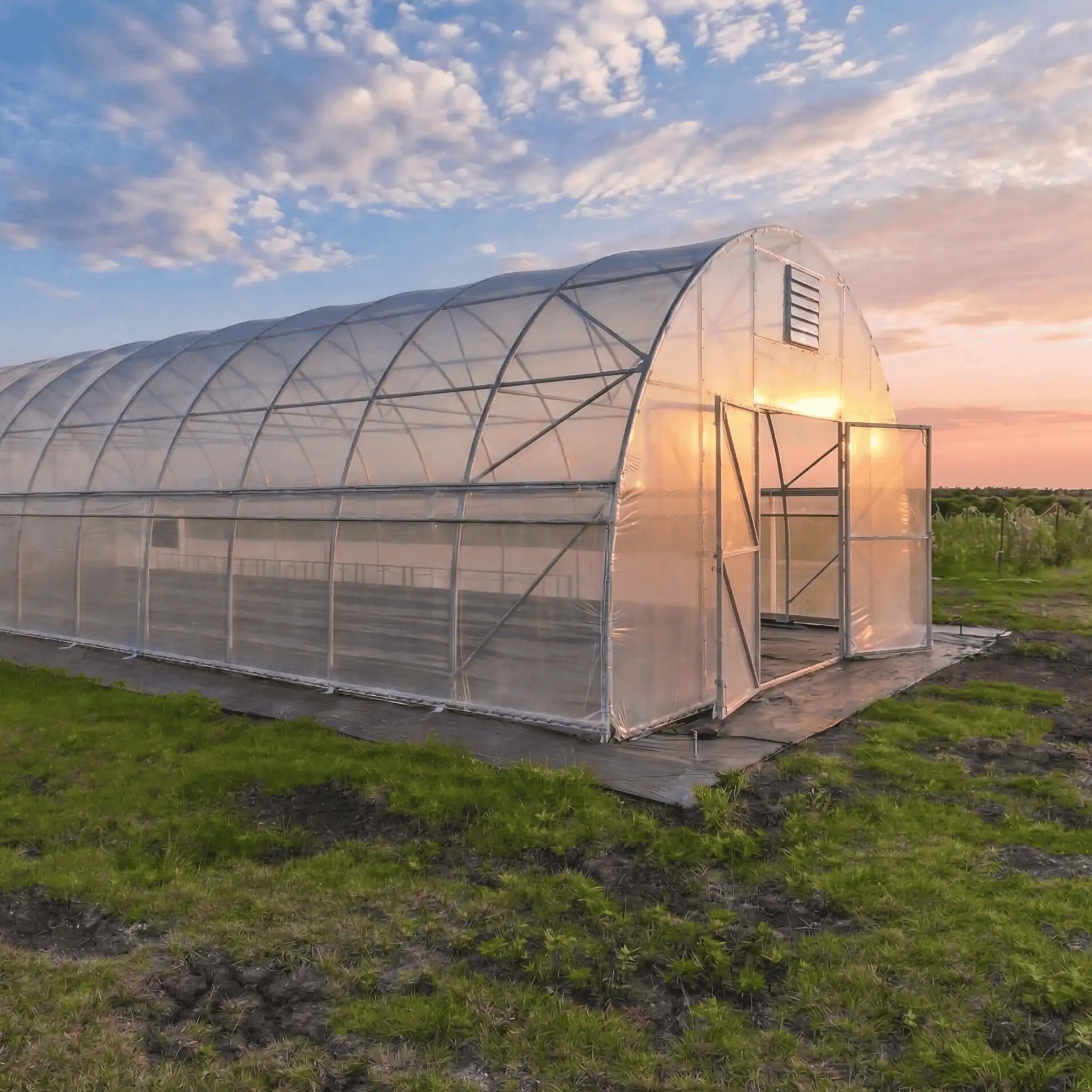
The hoop tunnel — arch starts at ground level, 14-foot peak, 7'6" bottom chord clearance.
Both get the job done, but they are built for different situations. Here is how to figure out which one makes sense for your operation before you buy.
If you have been shopping for a commercial greenhouse and found yourself going back and forth between a hoop tunnel and a high tunnel, you are not alone. From the outside they can look nearly identical — both are steel-framed, poly-covered structures that protect your crops from the elements. But the differences in how they are built and what they are optimized for are real, and they matter depending on what you are growing and how you plan to work inside.
Here is a straightforward breakdown of what sets them apart.
The core difference: profile and clearance
Both tunnels are the same width and use the same galvanized steel frame system — the difference is entirely in how the arch is shaped and where it starts.
A hoop tunnel arches continuously from the ground all the way up to a 14-foot peak. There are no vertical walls — the curve begins right at grade level. The bottom chord of the structure sits at 7'6" of clearance, and the 8'6" sliding doors fit cleanly because the arch gives you just enough height at the opening. The rounded profile makes the most of the full 30-foot base width, and the interior feels open and unobstructed from wall to wall.
A high tunnel starts with 8-foot vertical sidewalls before the arch begins, bringing the peak up to 16 feet. That extra height changes the whole feel of the interior — the bottom chord clears at 8'6", the same height as the doors, so you have consistent full-height clearance right to the edge of the structure. The vertical walls also give you a real perimeter to work against, which matters a lot for crops that are trellised or trained up the sides.
How the numbers compare
| Hoop Tunnel | High Tunnel | |
|---|---|---|
| Base width | 30 ft | 30 ft |
| Peak height | 14 ft | 16 ft |
| Sidewalls | None — arch starts at ground | 8 ft vertical sidewalls |
| Bottom chord clearance | 7'6" | 8'6" |
| Doors | Dual 8'6" sliding, both ends | Dual 8'6" sliding, both ends |
| Roll-up vents | Full length both sides | Full length both sides |
| Frame | Galvanized steel, wiggle-wire poly system | Galvanized steel, wiggle-wire poly system |
| Cover | 6-mil UV-stabilized poly included | 6-mil UV-stabilized poly included |
| Standard / Heavy models | Yes — 5 ft vs 4 ft arch spacing | Yes — 5 ft vs 4 ft arch spacing |
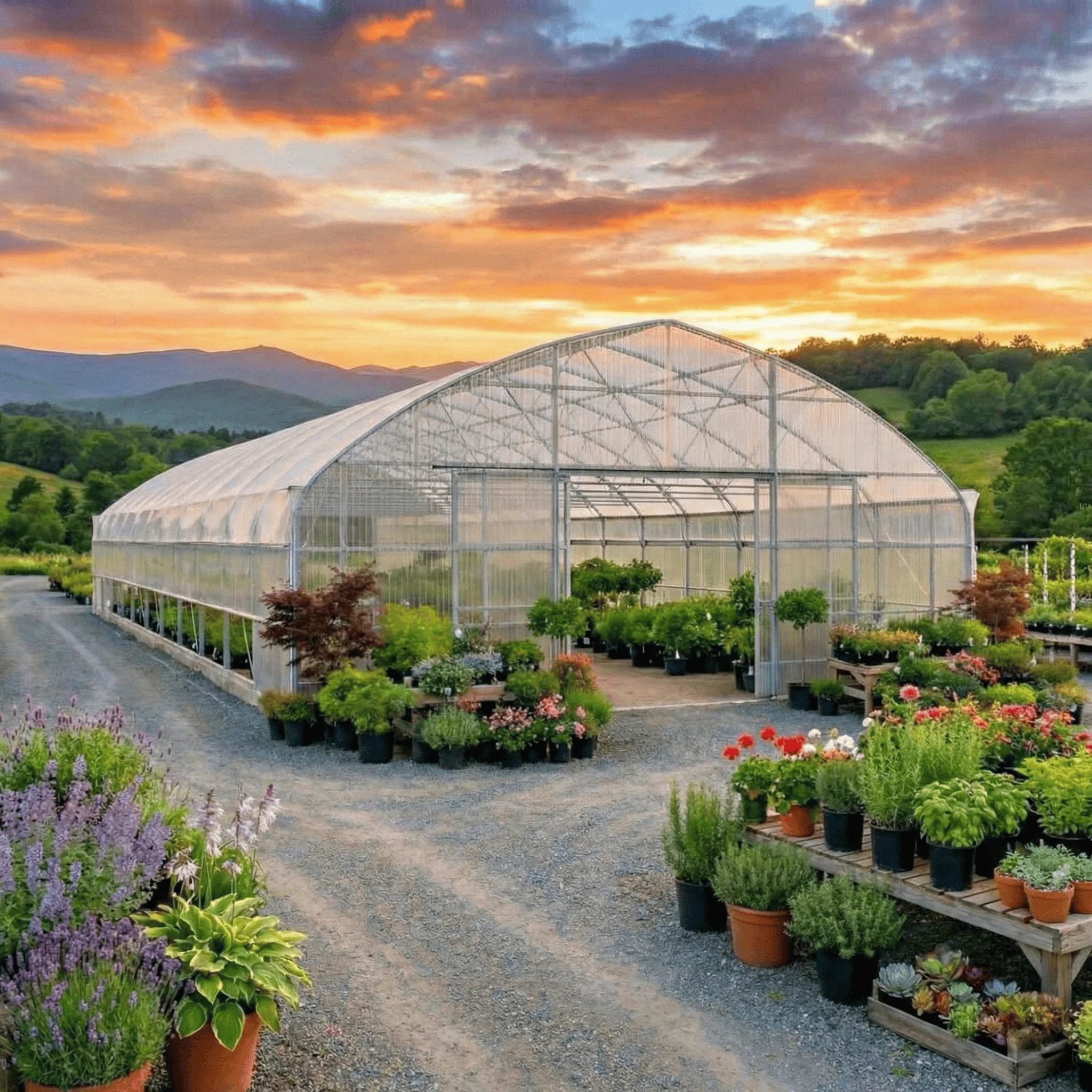
The high tunnel — 8-foot vertical sidewalls before the arch begins, 16-foot peak.
What they have in common
Beyond the arch profile, both structures are built from the same playbook. Both include dual 8'6" sliding vehicle doors on each end, full-length roll-up side vents, insect mesh ventilation, 6-mil UV-stabilized poly film for the main cover plus all side and end panels, the wiggle-wire poly channel system for fast cover changes, and a galvanized steel frame with ground-anchor foundation pipes. Neither structure requires a concrete foundation.
Both also come in a Standard and Heavy model. The Standard uses arches spaced 5 feet on centre with 2.0 mm arch walls. The Heavy steps up to 4-foot arch spacing, 2.5 mm arch walls, and a three-tier W-support truss system on every arch.
Worth noting: high tunnels are generally the stronger structure of the two. If you are in a region with significant snow loads, check your numbers using our calculators for Canada and the USA.
So which one is right for your operation?
Go with the hoop tunnel if:
Your priority is open floor space and simplicity. The hoop tunnel's continuous arch from ground to peak keeps the interior uncluttered from wall to wall — no vertical wall section to work around. It is well-suited for wide growing beds, equipment that needs to move freely through the space, and crops where horizontal spread matters more than vertical working height at the perimeter. The lower overall profile also tends to make it easier to cover and recover quickly.
Go with the high tunnel if:
You want more usable height at the sides and a structure that feels more like a traditional greenhouse. The 8-foot vertical sidewalls mean you have full standing height right at the perimeter — useful for tall crops trellised close to the sides, hanging systems, and operations where that extra headroom at the edges genuinely changes how you work. The higher peak and greater interior volume also give you more to work with for heating and airflow in colder months.
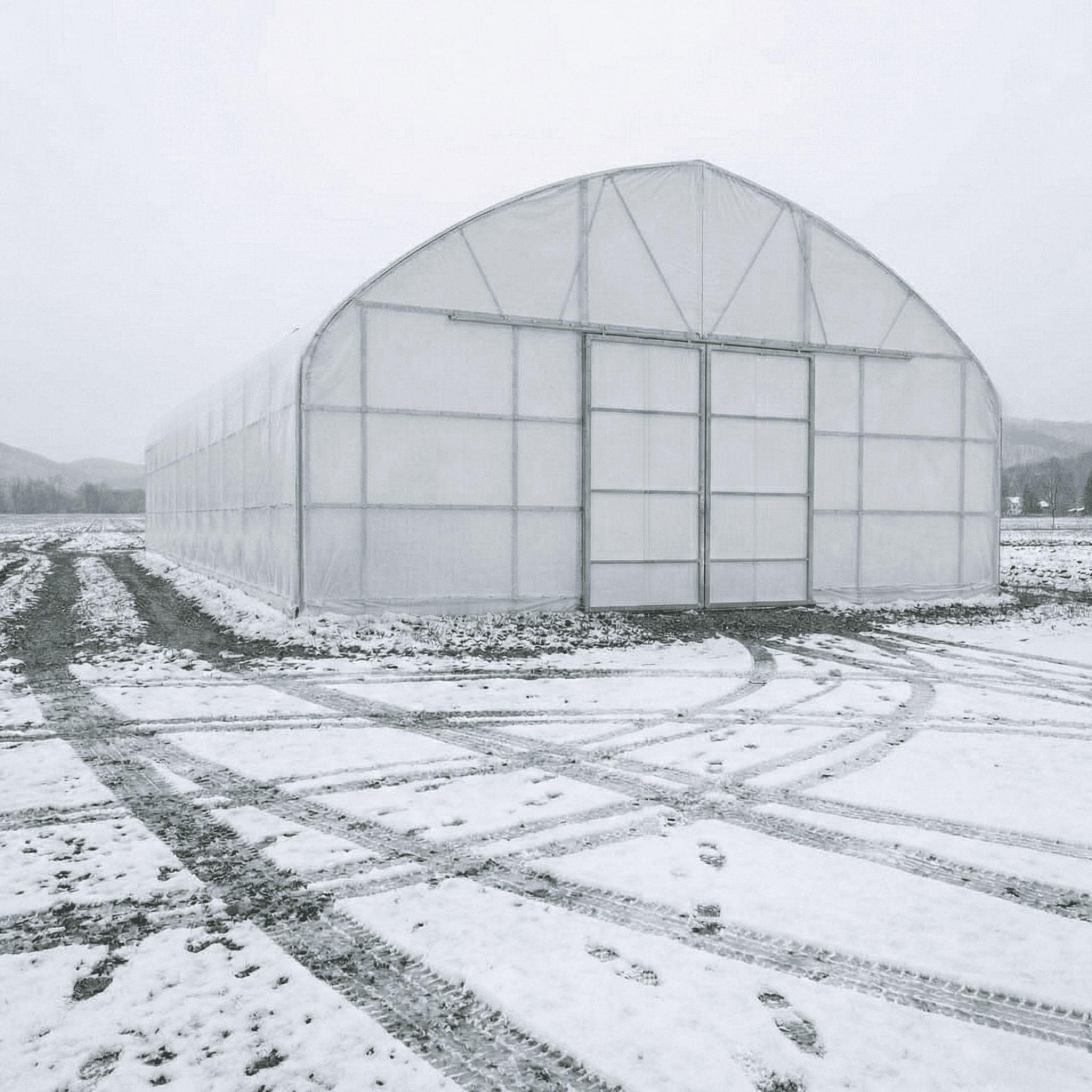
Both tunnel types handle winter conditions — but choosing the Heavy model matters in high-snow regions.
Both tunnel types come in 50-foot and 100-foot lengths, so once you have settled on the right structure type for your operation, you can size it to fit your site and production needs. The structural specs and feature sets are consistent across lengths — same galvanized steel frame, same wiggle-wire poly system, same door and vent configuration.
If you want to see how either structure fits your site before committing, our 3D Greenhouse Configurator lets you walk through the space interactively. It is a good way to get a real feel for the interior before anything ships.