Poly Plastic vs. Polycarbonate: Which Cover Is Right for Your Greenhouse?
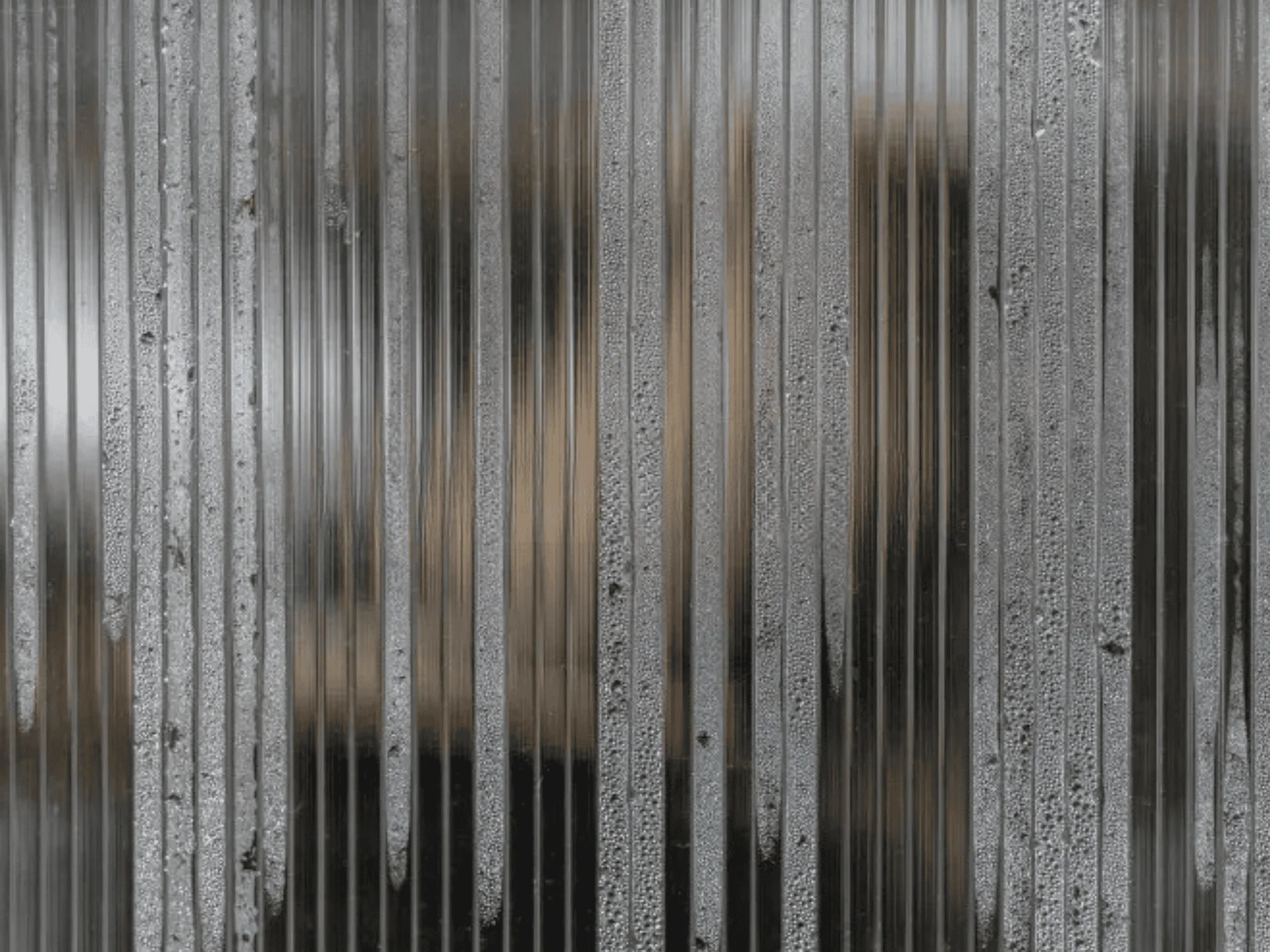
One is flexible and budget-friendly, the other is rigid and long-lasting. Both have their place — the question is where.
One is flexible and budget-friendly, the other is rigid and long-lasting. Both have their place. Here is how to think through the choice for your specific setup, climate, and budget.
Most growers buying their first greenhouse encounter this question early and spend too long on it. The honest answer is that both materials work well — the difference is not quality, it is application. Poly plastic and polycarbonate solve different parts of the heat retention and light transmission problem, and understanding where each material excels helps you put the right cover on the right surface rather than picking one and applying it everywhere.
This post covers the core properties of each, where they each make the most practical sense, and the cold-climate strategy that experienced growers use: double-layer poly on the roof, and polycarbonate on the ends and sides.
The basics of each material
6-mil UV-stabilized polyethylene film
Poly plastic — specifically 6-mil UV-stabilized polyethylene film — is the dominant cover material in commercial greenhouse production globally, and for good reason. It transmits roughly 88% of incoming light, which is exceptional for any covering material. It is lightweight, flexible, and fast to install and replace using wiggle-wire channels.
The limitation is insulation. A single layer of 6-mil poly has a U-value of approximately 6.2 W/m²K, which means heat passes through it relatively easily. On a cold night, a single-skin poly roof is not holding much warmth inside — it is doing most of its thermal work during the day by trapping solar gain, not by preventing nighttime loss.
6mm twin wall polycarbonate
Polycarbonate panels — specifically 6mm twin wall — are a rigid glazing material constructed with two outer skins connected by internal vertical webs that form enclosed air channels. Those channels are the key: the trapped air inside is what makes polycarbonate genuinely insulating, with a U-value of approximately 3.6 W/m²K. That is nearly twice the insulation than single-layer poly.
The main trade-off is light transmission. Polycarbonate transmits around 76% of light — meaningfully less than poly's 88% — which matters most on the roof, where your crops depend on maximum solar input. The material is rigid, and installation is more involved than a wiggle-wire poly system.
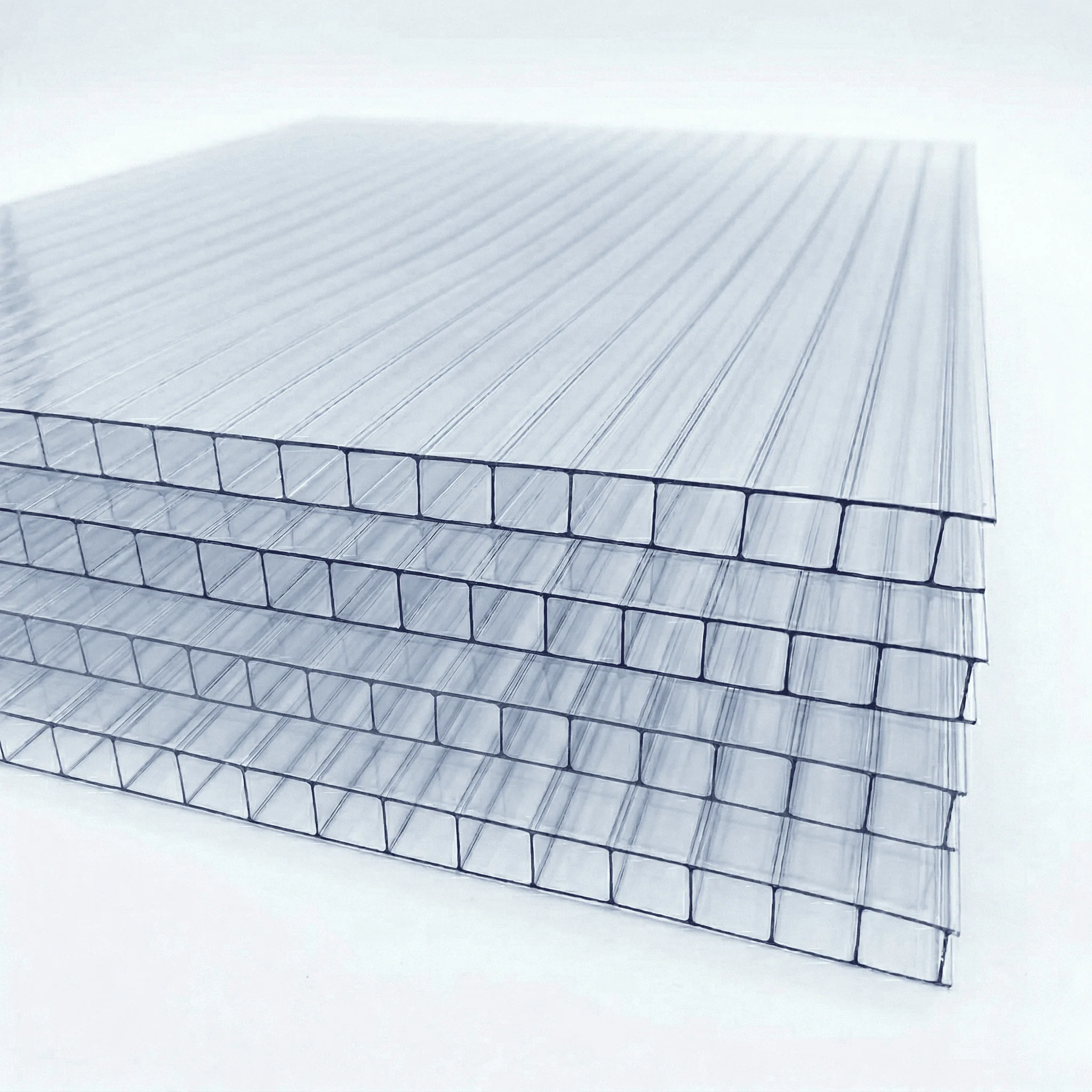
Twin wall polycarbonate's enclosed air channels give it a U-value of ~3.6 W/m²K — nearly twice the insulation than single-layer poly film.
| Property | 6-mil Poly Plastic | 6mm Twin Wall Polycarbonate |
|---|---|---|
| Light transmission | ~88% | ~80% |
| U-value (heat loss) | ~6.2 W/m²K (single layer) | ~3.6 W/m²K |
| Insulation | Minimal — single skin | Significant — enclosed air channels |
| Installation | Fast — wiggle-wire channel system | More involved — rigid panel fitting |
| Lifespan | 4–6 years typical | 10+ years |
| Curved surfaces | Yes — drapes naturally over arches | Yes — panels flex to gentle curves |
| UV protection | UV-stabilized coating included | Co-extruded UV layer both faces |
| Best surface | Curved roofs | Flat ends & vertical sidewalls |
The cold-climate strategy: double-layer poly on the roof
For any poly-covered greenhouse roof, the single most impactful insulation upgrade is adding a second layer of poly and inflating the air gap between them. This is standard practice in commercial greenhouse production and the numbers explain why.
A double-layer inflated poly roof drops the effective U-value from approximately 6.2 down to around 2.0 W/m²K — comparable to what twin wall polycarbonate delivers. The second poly sheet installs the same way as the first using the existing wiggle-wire channel system, and an air inflation pump running continuously at 15 to 40 watts keeps the two layers pressurized and separated all season.
In cold climates, double-layer poly on the roof is almost always worth doing. The pump runs continuously at very low wattage, the second poly sheet installs the same way as the first using the existing wiggle-wire channel system, and the heating savings over a cold winter are substantial. If you are growing through temperatures below −5°C, this is where to start.

A second layer of 6-mil poly with an inflated air gap between them brings the roof U-value down to ~2.0 W/m²K — nearly matching polycarbonate on a curved arch surface.
Where polycarbonate shines: ends and sidewalls
While double-layer poly is the stronger choice on the roof, polycarbonate genuinely earns its place on flat vertical surfaces — specifically the end walls, and on high tunnels, the sidewalls. Here is why the calculation flips.
End walls and vertical sidewalls are flat. Polycarbonate panels fit flat surfaces cleanly, directly, and permanently without any inflation system, seasonal installation, or moving parts. Once the panels are on, they are there — no wiggle wire to check, no inflation pump to monitor, no annual replacement cycle. On a surface where poly film would need to be re-tensioned, where wind pressure creates constant stress on the fastening system, and where you are not gaining the curved-arch snow-shedding advantage, the longevity and simplicity of rigid polycarbonate becomes genuinely attractive.
More importantly, the end walls and sidewalls are where your tunnel loses the most heat — especially overnight and in high wind. A polycarbonate end wall at 3.6 W/m²K versus a single-layer poly end panel at 6.2 W/m²K is a meaningful thermal difference on the surfaces that are most exposed to convective loss. And because end walls are relatively small in total area compared to the roof, panelling them in polycarbonate is very manageable.
For high tunnels specifically: The 6-foot vertical sidewalls are a significant heat loss surface and polycarbonate panels are a strong choice there too. However, covering the sidewalls in rigid polycarbonate panels means your roll-up side vent system can no longer operate as passive ventilation — the panels sit in the same zone as the roll-up poly. If you go this route, you need mechanical intake and exhaust fans sized for the tunnel's volume. Plan that system before committing to polycarbonate sidewalls.
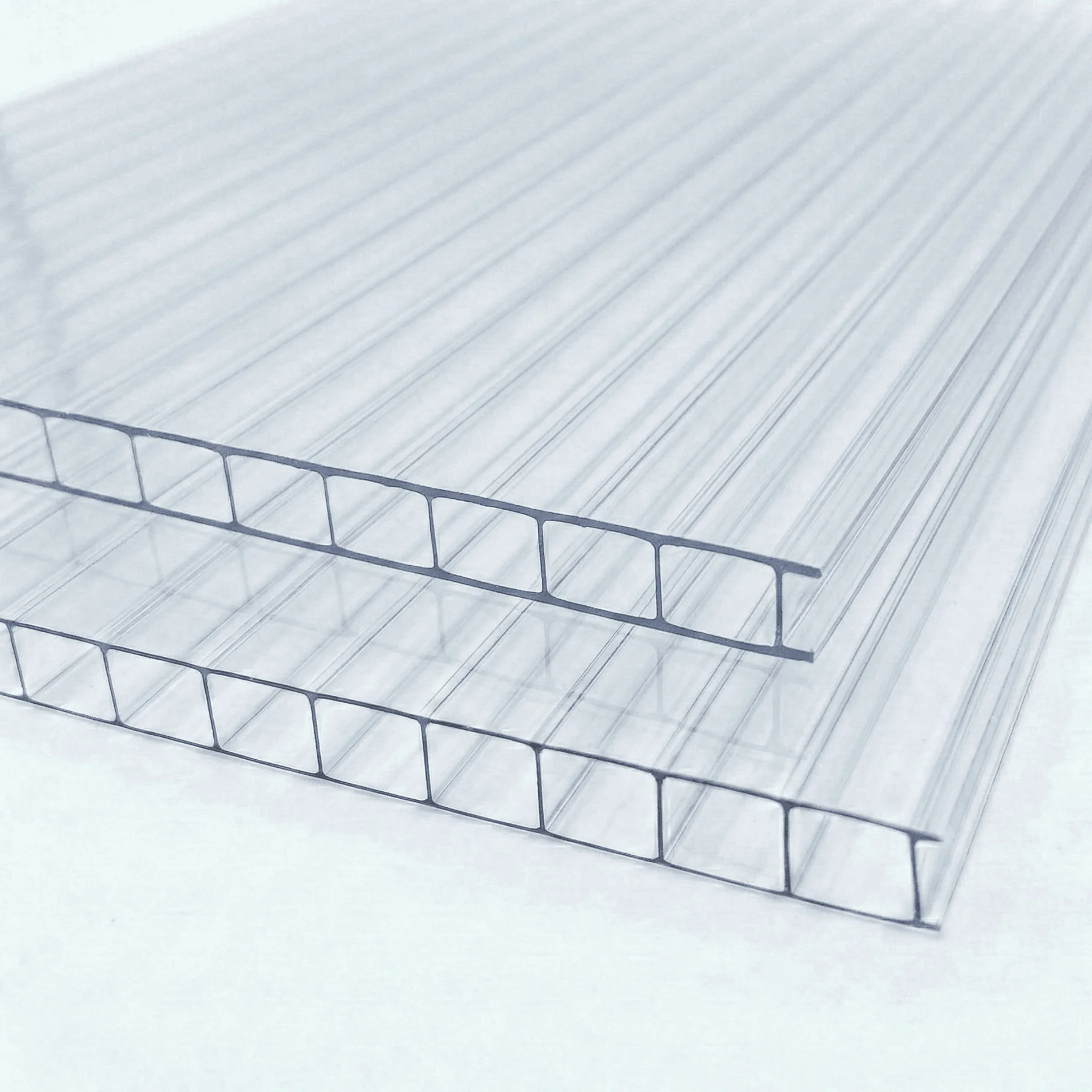
Polycarbonate panels are a natural fit for flat end walls — they install cleanly, require no seasonal maintenance, and deliver consistent insulation performance on the surfaces that lose the most heat.
Putting it together: where each material goes
How climate zone changes the math
Not every grower needs the same combination. The colder your climate, the more each insulation upgrade earns back in heating efficiency — and the more the case for polycarbonate ends and double-layer poly roofs strengthens. In mild climates, a single-layer poly roof may be entirely adequate and polycarbonate end panels may not add enough thermal benefit to justify the upgrade.
<−5°C
−5 to −15°C
−15 to −25°C
below −25°C
Not sure which zone you are in? The Canadian and US Snow Load Calculators give you the regional breakdown by province, territory, or state — and ground snow load is a useful proxy for overall winter severity when planning your cover strategy.
A note on light and crop selection
One thing worth keeping in mind: polycarbonate transmits roughly 12 percentage points less light than poly film. On the roof, that difference matters — it is the primary reason double-layer poly wins there over polycarbonate even when cost is not the constraint. The roof is your main solar collection surface and every percentage point of light transmission translates directly into plant growth rates and photosynthetic output.
On end walls and sidewalls, the light transmission gap matters much less. These surfaces are not your primary light source for crops; they are heat retention surfaces. The thermal advantage of polycarbonate on those surfaces is more valuable than the marginal light transmission difference, which is a big part of why the split strategy — poly roof, polycarbonate ends and sides — makes practical sense rather than being a compromise.