Where Should You Be Using a Shade Tarp?
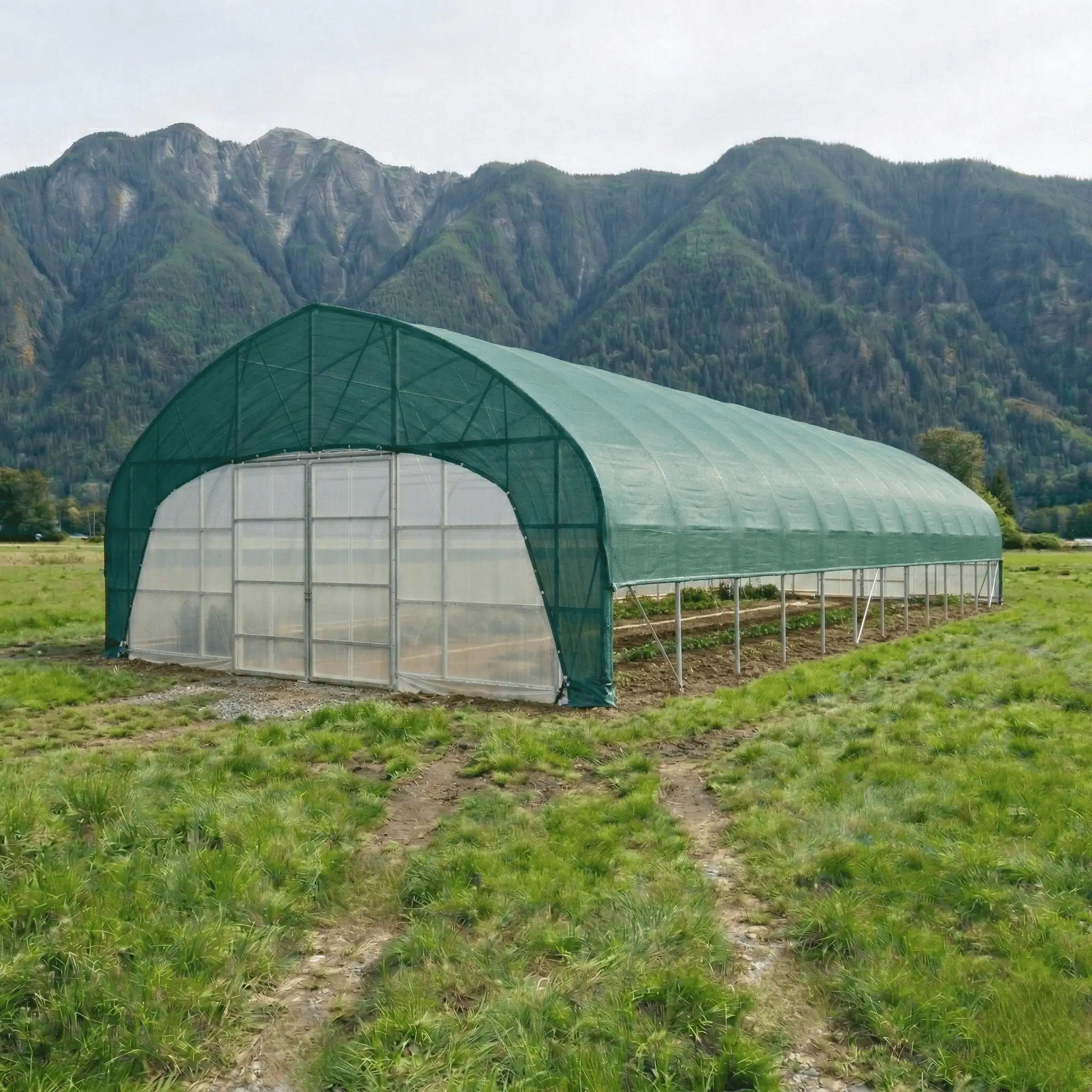
Shade tarps do more than cool a greenhouse — deployed in the right locations, they protect seedlings, reduce crop stress, extend season, and make workspaces more manageable through the hottest months.
Most growers think of shade tarps as a single-purpose summer tool — something you throw over the roof when it gets hot. They are actually useful in several distinct locations, and knowing which areas benefit most changes how you plan and deploy them.
The question is not just whether to use a shade tarp. It is where, at what percentage, and for what purpose. A 40% tarp over the main growing roof is doing a different job than a 50% tarp over a propagation bench or a 30% tarp draped over a hardening-off area outside. Each application has its own logic, and treating shade cloth as a single tool deployed in a single place leaves a lot of its value on the table.
What follows is a breakdown of the locations where shade tarps consistently earn their keep — starting with the most critical and working outward.
The locations that benefit most
External placement — draped over the outside of the poly rather than hung inside — is more thermally effective because it intercepts radiation before it enters the structure. The heat the tarp generates dissipates to the outside air rather than accumulating inside. For fruiting crops like tomatoes, cucumbers, and peppers that need strong light but suffer above 35°C, a 30–40% roof tarp paired with open sidewall ventilation is the baseline summer management strategy.
A 50% shade tarp over a propagation bench — either a section of the main tunnel partitioned off or a dedicated propagation house — protects young plants during the period when they are most vulnerable. This is not about limiting their growth long-term; once transplanted into the main growing area they will adapt to higher light levels quickly. The shade tarp's job here is to get them to transplant size without stress-induced setbacks. In summer, a propagation area without shade is a liability.
A hardening-off area is simply an outdoor space with a shade tarp suspended overhead — 30 to 40% is appropriate for most vegetable transplants — where seedlings spend 5 to 10 days before going into the field. The tarp filters direct sun without replicating the full greenhouse environment, giving the plant time to build up the photoprotective pigments and thicker cuticle that outdoor conditions require. Even a simple structure of posts and wire with a tarp draped over it represents a meaningful improvement in transplant success rates compared to putting seedlings straight into an open field.
A 40–50% shade tarp over a designated leafy greens section — even just a portion of the tunnel — extends the productive window for these crops by several weeks. The reduced light level keeps daytime temperatures more favourable, slows the photoperiod-driven bolting response, and maintains the mild, sweet flavour profile that makes these crops worth growing. Growers running mixed production often benefit from zoning their tunnels: fruiting crops in the brighter section, greens under shade at the other end.
A shade tarp or shade panel on the interior or exterior of the south-facing end wall — 40 to 50% is appropriate — intercepts this afternoon load at the source. It is a lower-effort intervention than covering the full roof and can make a meaningful difference in end-of-tunnel temperatures during peak afternoon heat. This is particularly useful in structures where crops are grown all the way to the end walls rather than leaving a buffer zone.
The installation is straightforward: metal T-posts or wooden posts at the corners and mid-span, a horizontal wire or cable tensioned between them, and the shade cloth draped and clipped or tied. Height matters — keep the tarp high enough above the canopy that air can circulate freely underneath, which prevents the warm, stagnant air pocket that can develop under low-hung cloth on calm days. A minimum of 60cm clearance above the tallest crop is a reasonable baseline.
Matching shade percentage to the location
Not all of these areas need the same shade level. Using the same percentage everywhere is the most common mistake — the roof over fruiting crops and a propagation bench have entirely different light requirements, and treating them identically either under-shades one or over-shades the other.
| Location | Recommended % | Primary goal |
|---|---|---|
| Main roof — fruiting crops | 30–40% | Heat reduction without limiting photosynthesis |
| Propagation / seedling bench | 50% | Protect vulnerable root systems and new foliage |
| Hardening-off area (outdoor) | 30–40% | Gradual acclimatization to outdoor radiation |
| Cool-season / leafy greens zone | 40–50% | Extend season, prevent bolting, maintain flavour |
| South-facing end wall | 40–50% | Block afternoon low-angle sun at canopy level |
| Outdoor beds — shade crops | 30–50% | Crop-specific — match to light saturation point |
Higher percentage is not better by default. Going above 50% on a main growing roof reduces available PAR below the productive range for most vegetable crops. At 60%+ over fruiting crops, you are trading heat stress for light stress — and light-limited plants produce less, ripen slower, and are more susceptible to certain fungal diseases that thrive in low-light, high-humidity conditions. Use the lowest percentage that solves the specific problem in each zone.
The areas where shade tarps are often overlooked
Two locations come up repeatedly in grower conversations where shade tarps would make a clear difference but are often not deployed: the potting and work area, and the water source.
A covered work area — even a simple shade tarp suspended over a potting bench outside the tunnel entrance — dramatically improves working conditions during summer and also protects transplants and potted seedlings sitting in staging areas from direct sun stress. Plants sitting in small containers waiting to be transplanted have limited root volume and overheat quickly when exposed to direct summer radiation. A work area tarp is one of the most practical additions to a summer greenhouse setup and one of the cheapest to implement.
Similarly, water tanks and irrigation lines sitting in direct sun can reach temperatures that stress plant roots on contact — particularly in early morning irrigation cycles when the line has been sitting in direct sun overnight. A shade tarp over an exposed water tank or along irrigation lines running over open ground keeps supply water closer to ambient temperature and reduces the thermal shock to the root zone.
Think in zones, not structures. The most effective shade tarp strategies treat the greenhouse operation as a series of distinct zones — each with its own light requirement, crop type, and heat sensitivity — rather than as a single structure that either gets shaded or does not. A small investment in a second or third shade tarp, deployed thoughtfully across propagation, hardening-off, and the main growing area, produces better outcomes than a single large tarp used as a blunt instrument over everything.
When to take them down
Shade tarps left in place beyond their useful window cost you light — and in northern climates, the late-season light window is one of the most valuable growing periods of the year. The general signal to remove a roof tarp is when overnight temperatures drop consistently below 15°C and daytime highs are reliably under 28°C. At that point heat stress is no longer the limiting factor, and the 30–40% light reduction is slowing growth more than heat stress was.
For propagation tarps, the timing is crop-driven rather than temperature-driven: remove or reduce shading once seedlings are established and developing their second true leaf set, which is when they begin to actively benefit from higher light levels. Leaving propagation shade in place past this point slows development and can produce leggy, etiolated transplants.
Remove, rinse, dry fully, and store tarps rolled in a dry location away from UV exposure at the end of the season. A knitted HDPE shade tarp stored correctly will last many seasons — the main causes of premature failure are UV degradation from year-round outdoor exposure and being folded and stored while damp.