Why Growers Choose Tarp Covers Over Standard Poly for Mushroom and Cannabis Operations
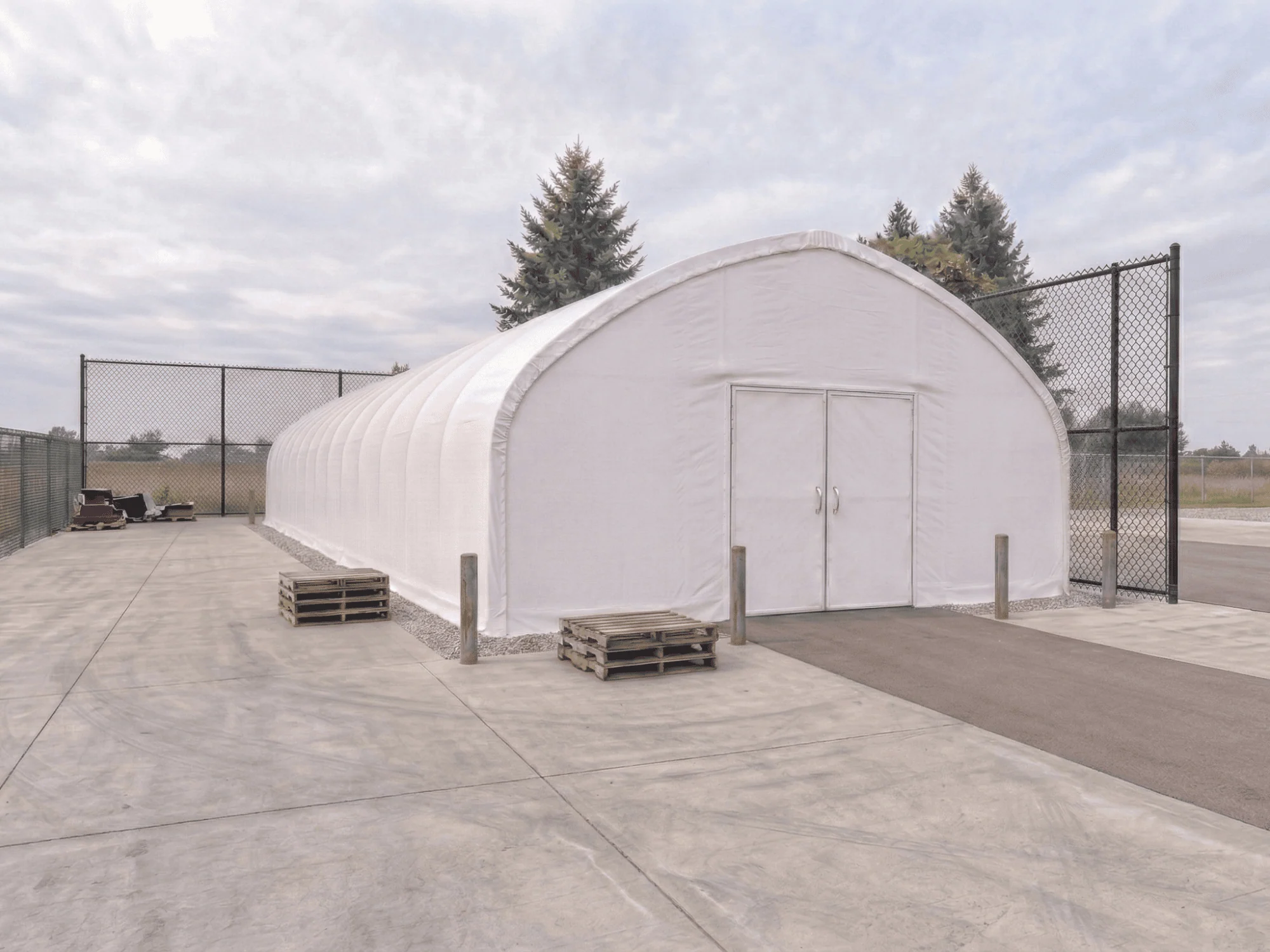
Light control, humidity management, and blackout capability make tarpaulin covers a different tool entirely. Here is when they make more sense than standard poly film for specialty crops.
Standard 6-mil poly film is the right cover for the vast majority of greenhouse operations. It lets light in, holds heat, and does exactly what a growing environment needs. But mushroom cultivation and light-sensitive cannabis grows work differently — and when the goal is to block light completely, manage humidity tightly, and keep the environment as sealed as possible, a tarpaulin cover changes the equation.
Here is what the tarp cover option actually does differently and why certain growers reach for it instead of poly film.
The core difference: what the cover is designed to do
Standard greenhouse poly film is engineered to transmit as much usable light as possible while protecting against weather. That is the right priority for tomatoes, cucumbers, flowers, and most commercial crops. But it is the wrong priority for mushrooms, which grow best in darkness, and for cannabis operations running a light deprivation schedule to control flowering cycles.
A tarpaulin cover is opaque. It blocks light rather than transmitting it, which turns the tunnel into a controlled-darkness environment. That one change unlocks growing approaches that simply are not possible under standard poly — running blackout periods on demand, growing light-sensitive mushroom varieties without a separate dark room, and triggering cannabis flowering cycles on a schedule rather than waiting on natural day length.
What comes with the kit
The tarp cover kit does not replace the standard poly — it adds to it. The kit includes both the tarpaulin outer cover and the standard 6-mil UV-stabilized poly film that every tunnel comes with. The poly still does its job on the structure: it handles the load of the cover system, manages rain and wind, and keeps the frame protected. The tarp layer is what gives you the blackout capability on top of that.
The kit also includes a ground poly — a separate sheet that lays across the floor of the tunnel and seals at the base. This is the piece that completes the environment. Without a ground seal, light creeps in at grade level and humidity escapes underneath. With the ground poly in place, the interior becomes a genuinely sealed growing environment: dark when you need it dark, and with the humidity retention that mushroom cultivation in particular depends on.
What the kit includes: tarpaulin outer cover, 6-mil UV-stabilized poly film (same as the standard kit), ground poly sheet for floor sealing, and the wiggle-wire channel system for the cover. The same galvanized steel frame and door and vent configuration applies — nothing about the structure itself changes.
Why a sealed floor matters
Most greenhouse discussions focus on what is happening above head height — cover material, ventilation, heating. The floor rarely comes up. But in a mushroom or cannabis environment, the ground is a significant source of both light intrusion and humidity loss.
Even a small gap at the base of a tunnel lets ambient light bleed in at floor level, which can disrupt sensitive crops at exactly the wrong time. For mushrooms, light at the wrong stage can affect pinning and fruiting. For cannabis in a light dep schedule, any uncontrolled light exposure during the dark period risks triggering stress responses and compromising the crop.
The ground poly eliminates that gap. Laid across the floor and sealed at the perimeter, it closes off the base of the structure and works together with the tarpaulin outer cover to create an enclosure that is dark and sealed when it needs to be.
Ventilation still works the same way
One question that comes up with blackout setups is what happens to airflow. The answer is that the roll-up side vents work the same way they do on a standard poly tunnel — you open them when you need ventilation and close them to maintain the sealed environment. The tarp cover system does not interfere with the vent operation. During a light dep dark period, vents are kept closed to maintain darkness. Between cycles, you open them as normal to move air through the space.
The dual 8'6" sliding doors on each end function identically to a standard tunnel as well. Entry and exit during dark periods is something growers manage with timing and light-lock vestibules if their operation requires it, but the doors themselves are unchanged.
Who this setup is actually for
Mushroom cultivators:
The combination of a sealed, dark, humidity-retaining environment is exactly what mushroom cultivation requires through most of the growth cycle. The tarp cover and ground poly together create that environment inside a commercial-scale steel-framed tunnel without the need to build a dedicated dark room or retrofit an existing structure.
Cannabis growers running light dep:
Light deprivation growing — manually controlling when plants receive light and darkness — lets growers trigger flowering on their own schedule rather than waiting on the season. It is widely used to get multiple harvests per year and to grow photoperiod varieties in regions where the natural day length does not cooperate. The tarp cover makes that possible in a standard tunnel format.
If your operation uses standard poly and you are growing crops that do not depend on light control, there is no reason to change anything. But if you are running specialty crops where darkness is part of the process, the tarp cover kit is how you get there without a different structure entirely.