Vertical Hydroponics: How Tower Systems Work and Who They Are For
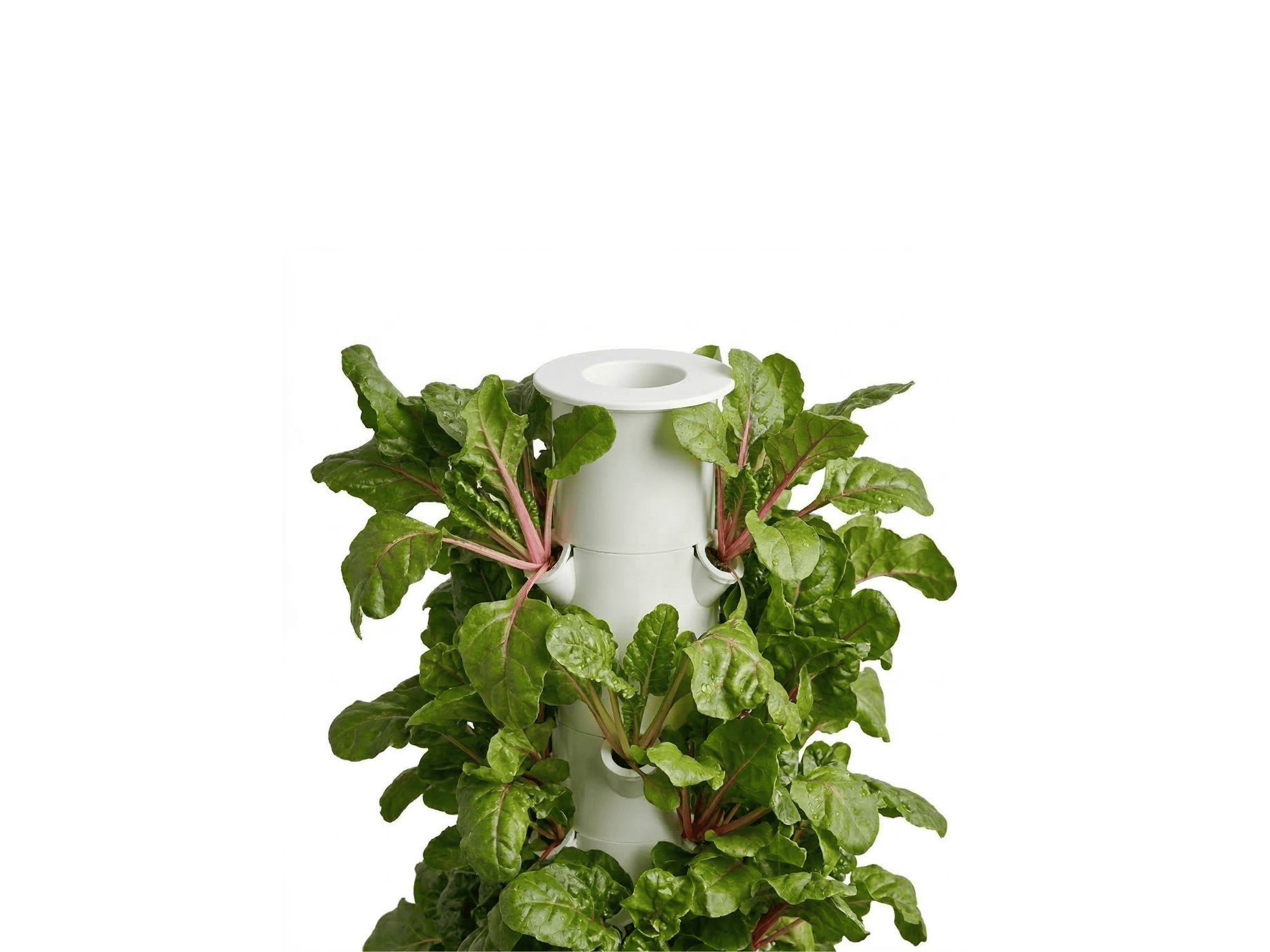
Growing vertically can multiply your yield per square foot dramatically. Here is the basic science behind tower systems and what kind of crops do best in them.
Floor space is the limiting factor in most greenhouse operations. Once the beds are laid out and the paths are accounted for, the usable growing area is fixed — and in a 30-foot-wide tunnel, a significant portion of the interior volume above crop height goes unused. Vertical hydroponic tower systems work against that constraint by stacking growing sites upward rather than spreading them across the floor, turning the height of the structure into productive space.
The concept is straightforward, but there are real constraints on what grows well in a tower and what does not. Understanding both sides of that equation is worth doing before you commit floor space and infrastructure to the system.
How a tower system works
A vertical tower is a column — typically made from PVC, food-grade plastic, or purpose-built panels — with growing sites arranged around the outside at regular intervals up the height of the structure. Plants sit in small net cups or pockets at each site with their roots exposed to the interior of the tower. Nutrient solution is pumped from a reservoir at the base up to the top of the tower, where it flows down through the interior of the column, passing the roots of every plant on its way down, and drains back into the reservoir to be recirculated.
The pump runs on a timer — typically in short cycles throughout the day rather than continuously — and the nutrient solution is mixed in the reservoir at a concentration calibrated to the crop being grown. There is no soil involved. The roots get everything they need from the solution flowing past them: water, nutrients, and oxygen from the brief dry periods between cycles when the roots are exposed to air rather than submerged.
The reservoir is the heart of the system. Water volume, nutrient concentration, pH, and temperature in the reservoir determine what the plants receive at every growing site up the tower. A reservoir that is too small fluctuates in concentration and pH rapidly as plants draw from it. A well-sized reservoir — large enough relative to the number of growing sites being fed — stays more stable between top-ups and requires less frequent adjustment.
What grows well in a tower
Tower systems are purpose-built for fast-cycling, lightweight crops with shallow root systems. Lettuce is the benchmark crop — it germinates quickly, roots readily in net cups, grows fast under the recirculating nutrient flow, and can be cut and regrown from the base for multiple harvests before the site needs replanting. Spinach, kale, chard, arugula, and other leafy greens perform similarly well. Herbs — basil, cilantro, parsley, mint — are well suited to towers and produce at high density given the number of growing sites a tower can hold in a small footprint.
Strawberries are one of the more commercially successful fruiting crops in tower systems. The plants are compact, the fruit hangs clear of the tower structure and is easy to harvest, and the yield per square foot at scale is strong enough that dedicated strawberry tower operations are a viable commercial model.
What does not work in a tower is anything with a large, heavy root system or significant fruit weight. Tomatoes, cucumbers, squash, and melons need more root volume, more structural support, and more nutrient delivery than a recirculating tower is designed to provide. These crops belong in ground beds or deep container systems where the root zone can expand properly.
The yield-per-square-foot advantage
The productivity argument for towers comes down to the ratio of growing sites to floor footprint. A single tower column 6 feet tall with growing pockets spaced 6 inches apart in a staggered pattern around the circumference can hold 20 to 30 plants in a floor footprint of roughly 1 square foot. A conventional ground bed growing lettuce at standard spacing might yield 4 to 6 plants per square foot. The multiplication is significant, and it compounds across a row of towers running the length of a tunnel.
The practical limit is light. Plants on the shaded side of a tower receive less light than those facing the primary light source. In a greenhouse with good light from above and both sides, towers positioned to allow light to reach all faces perform best. Rotating towers periodically — or using supplemental lighting positioned to reach the full column — addresses the shading issue in lower-light environments.
Infrastructure requirements
A tower system needs a few things the rest of a greenhouse operation typically does not: a nutrient reservoir for each tower or tower bank, a pump, a timer, and supply and return lines running between the reservoir and the top of each tower. In a single-tunnel operation with one bank of towers, this is a modest setup. Scaled across a larger operation with multiple banks, it requires more planning around reservoir placement, pump sizing, and how nutrient solution is mixed and replenished.
Water quality matters more in a recirculating hydroponic system than in soil growing. Hard water with high mineral content interacts with nutrient solutions and can throw off pH faster than soft water. A basic water quality test before designing the system is worth doing — it tells you whether you need to account for pH buffering or mineral buildup in your reservoir management routine.
Who tower systems make sense for
Growers with limited floor space who want high leaf and herb output:
If your tunnel is already at capacity in ground beds and you are looking for additional production without adding structure, a bank of towers along one wall or down the centre of the space is one of the more efficient ways to add growing sites without expanding the footprint.
Operations focused on fast-cycling crops with short sales windows:
Lettuce and fresh herbs turn over quickly, and the speed advantage of hydroponics — faster growth rates than soil due to direct nutrient delivery and no root energy spent searching for nutrients — means more cycles per year. For operations supplying restaurants, markets, or CSA boxes where freshness and quick turnaround matter, that cycle speed has direct commercial value.
Growers exploring diversification within an existing tunnel:
A tower bank does not have to replace anything — it can sit alongside conventional ground beds growing different crops. Towers for salad greens and herbs, ground beds for fruiting crops, all under the same cover. The infrastructure investment is modest enough at small scale that it is a reasonable way to test the system before committing to a larger installation.