What Does "UV Stabilized" Mean for Greenhouse Poly Film?
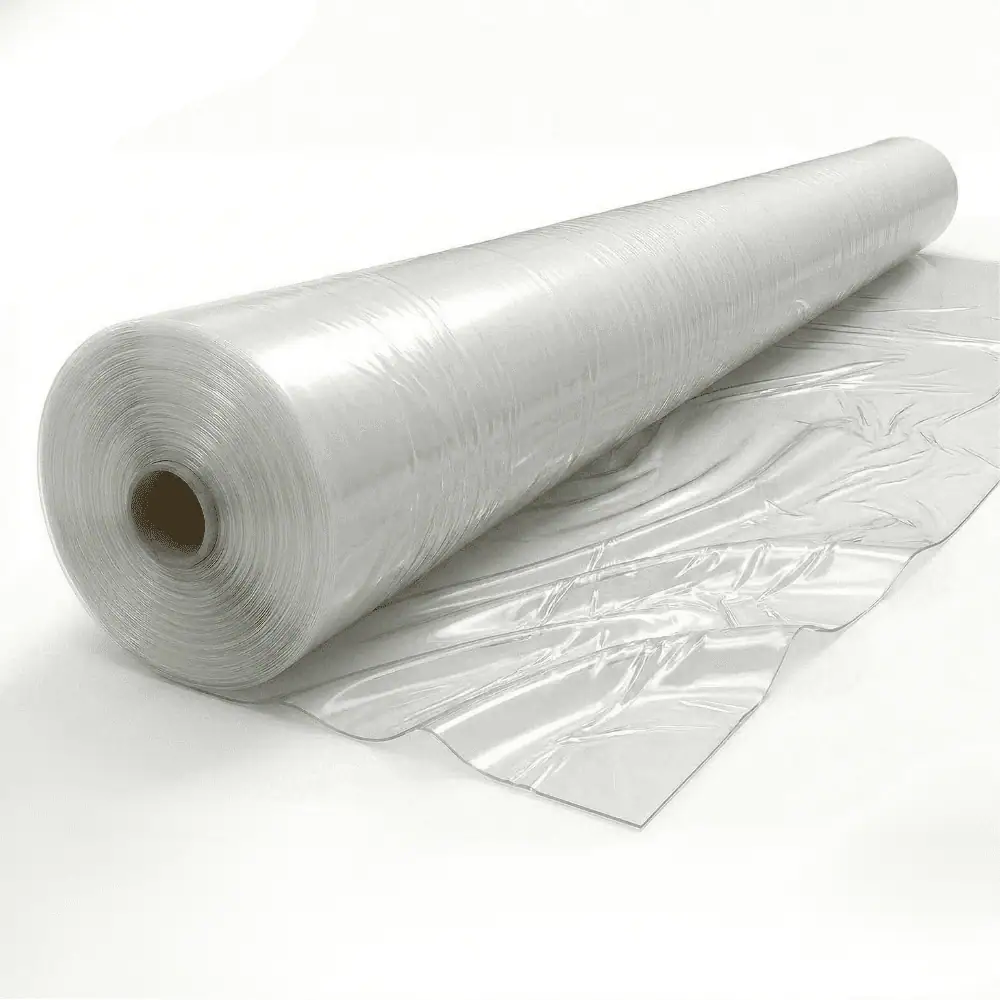
UV stabilization is what keeps greenhouse poly clear and flexible under years of direct sun exposure — without it, the film would chalk, crack, and fail within a single season.
Every roll of greenhouse poly film carries a UV stabilized label, and most growers accept that as a given without knowing what it actually means. Here is what is actually happening inside the film, why it matters, and how to use that knowledge to get the most out of your cover.
Polyethylene — the base material in greenhouse poly film — is inherently vulnerable to sunlight. Left untreated, the UV radiation in direct sun causes the polymer chains to break apart at a molecular level, turning a flexible, clear film into something chalky, brittle, and structurally useless within a single growing season. UV stabilization is the chemistry that prevents that from happening. Understanding it helps you make better decisions about film selection, replacement timing, and what the year ratings on the bag actually mean.
What UV radiation does to polyethylene
Sunlight contains radiation across a wide spectrum. The visible light portion is what your plants use for photosynthesis. The ultraviolet portion — specifically UV-B (280–315 nm) and UV-A (315–400 nm) — carries enough energy to attack the chemical bonds in polyethylene directly.
When UV photons are absorbed by the polymer, they trigger a process called photo-oxidation. The polymer chains begin to break — a process known as chain scission — and oxygen from the air reacts with the broken ends, creating carbonyl groups and free radicals that propagate further damage. Visibly, this shows up as a gradual loss of clarity, a chalky or milky surface appearance, increasing brittleness, and eventually cracking and tearing under normal mechanical stress. This process is accelerated by heat, which is why film in hot climates or on south-facing surfaces degrades faster than film in cooler or more overcast regions.
None of that is recoverable. Once photo-oxidation begins in earnest, the film's structural integrity and light transmission both decline and cannot be restored. The only answer is chemistry built into the film from the start.
How UV stabilization works: HALS
The primary stabilization mechanism in modern greenhouse poly is a class of compounds called Hindered Amine Light Stabilizers, or HALS. These are not UV absorbers — they do not intercept UV radiation before it hits the polymer. Instead, they work downstream: they scavenge and neutralize the free radicals that UV photo-oxidation generates, interrupting the chain reaction before it can propagate structural damage through the film.
HALS are remarkably efficient because they are regenerative — after neutralizing a free radical, the HALS molecule is restored to its active form and can repeat the cycle. This is why a relatively small concentration of HALS can protect a film for years rather than months. The concentration, molecular weight, and distribution of HALS throughout the film's thickness are the primary variables that determine how long a given film will actually last in the field.
Most quality greenhouse films also incorporate UV absorbers as a secondary layer of protection. These compounds — typically benzophenones or benzotriazoles — do intercept UV radiation, converting it to harmless heat before it reaches the polymer chains. The combination of UV absorbers and HALS is what makes a 6-year film meaningfully more durable than a 4-year film, not simply a thicker gauge of base material.
UV-stabilized film (left) retains clarity and flexibility after extended field exposure. Unstabilized or depleted film (right) turns chalky and brittle as photo-oxidation advances through the polymer.
What the year ratings actually mean
Greenhouse poly is sold with a year rating — typically 4-year or 6-year in North America — and this is the specification growers use most when making purchasing decisions. It is worth understanding what that number represents and what it does not.
The year rating refers to the number of seasons the film is expected to maintain acceptable performance under standard agricultural conditions before UV degradation causes it to fail. "Failure" in this context means the film loses more than a defined percentage of its tensile strength — typically 50% — as measured by standardized accelerated weathering tests. It does not mean the film will be in perfect condition at the end of that period; by year 4 or 6 a well-stabilized film will have lost some clarity and flexibility, but it will still be structurally functional.
Year ratings are calibrated to a standard UV index, not your specific location. The test conditions used to establish a 4-year or 6-year rating correspond to a temperate climate with moderate UV exposure — roughly equivalent to central Europe or the northern United States. If your greenhouse is in a high-UV environment (high altitude, southern latitude, or semi-arid region with few overcast days), the film will exhaust its stabilizer package faster than the label suggests. A 6-year film in the Canadian prairies may legitimately reach 7 or 8 years. The same film in Colorado at altitude may show signs of depletion before year 5.
| Property | 4-Year Film | 6-Year Film |
|---|---|---|
| HALS concentration | Standard | Higher — extended scavenging capacity |
| UV absorber layer | Single-side typical | Both faces, heavier loading |
| Typical thickness | 4–5 mil | 6 mil standard |
| Light transmission | ~85–87% | ~88% |
| Tensile strength at end of rating | ~50% retained | ~50% retained |
| Best application | Short-term, mild climates, seasonal structures | Year-round production, cold or high-UV climates |
The other additives in the formulation
UV stabilization is the most important additive category in greenhouse poly, but commercial agricultural films typically include several others that affect how the film performs for plants — not just how long it survives in the sun.
Not all films carry all additives. A basic 6-mil film may have UV stabilization and nothing else. A premium agricultural film will combine UV stabilization with anti-drip, thermal IR, and anti-dust treatment in a single coextruded product. Read the spec sheet, not just the year rating — those additional treatments can meaningfully affect crop performance across a season even if they do not affect how long the film physically lasts.
How to read a degrading film
UV stabilizers deplete over time. The HALS and UV absorber pool is finite — once exhausted, photo-oxidation accelerates rapidly. A film near the end of its useful life gives visible and tactile signals well before it fails structurally, and catching them early lets you plan replacement on your schedule rather than responding to a failure mid-season.
-
Surface chalking or haziness. A fresh film is optically clear. As photo-oxidation progresses, the outer surface develops a milky or chalky appearance — the polymer surface is breaking down at a microscopic level. This is also where light transmission loss begins.
-
Reduced flexibility in cold temperatures. Degraded poly becomes brittle, particularly below freezing. If the film cracks or tears more easily when you handle it in cool weather than it did when new, the polymer chains have shortened significantly and tensile strength is declining.
-
Increased tearing at fastening points. The wiggle-wire channel edge and any penetration points are high-stress zones. If the film is tearing at these points more than usual — particularly with moderate wind rather than exceptional events — the film's tensile strength is compromised.
-
Yellowing or browning tint. A yellowish cast in the film, especially near the ridge or on south-facing surfaces, indicates advanced carbonyl formation from oxidation. At this stage the film is well past its useful life and replacement should not be deferred.
-
Loss of anti-drip performance. If a film that previously sheeted condensation cleanly has reverted to forming water droplets on the inner surface, the surfactant treatment has been depleted — a good proxy that the stabilizer package may also be approaching exhaustion.
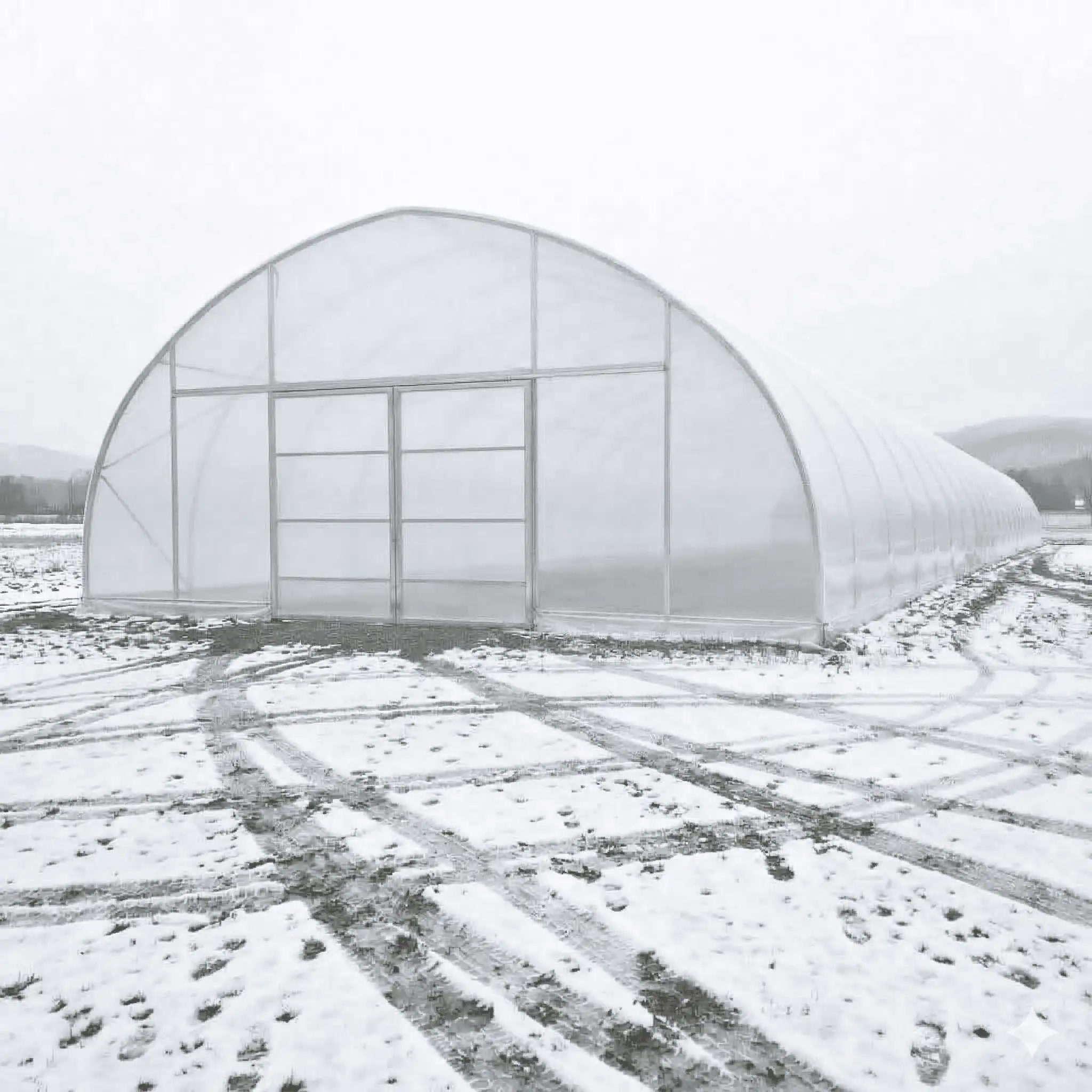
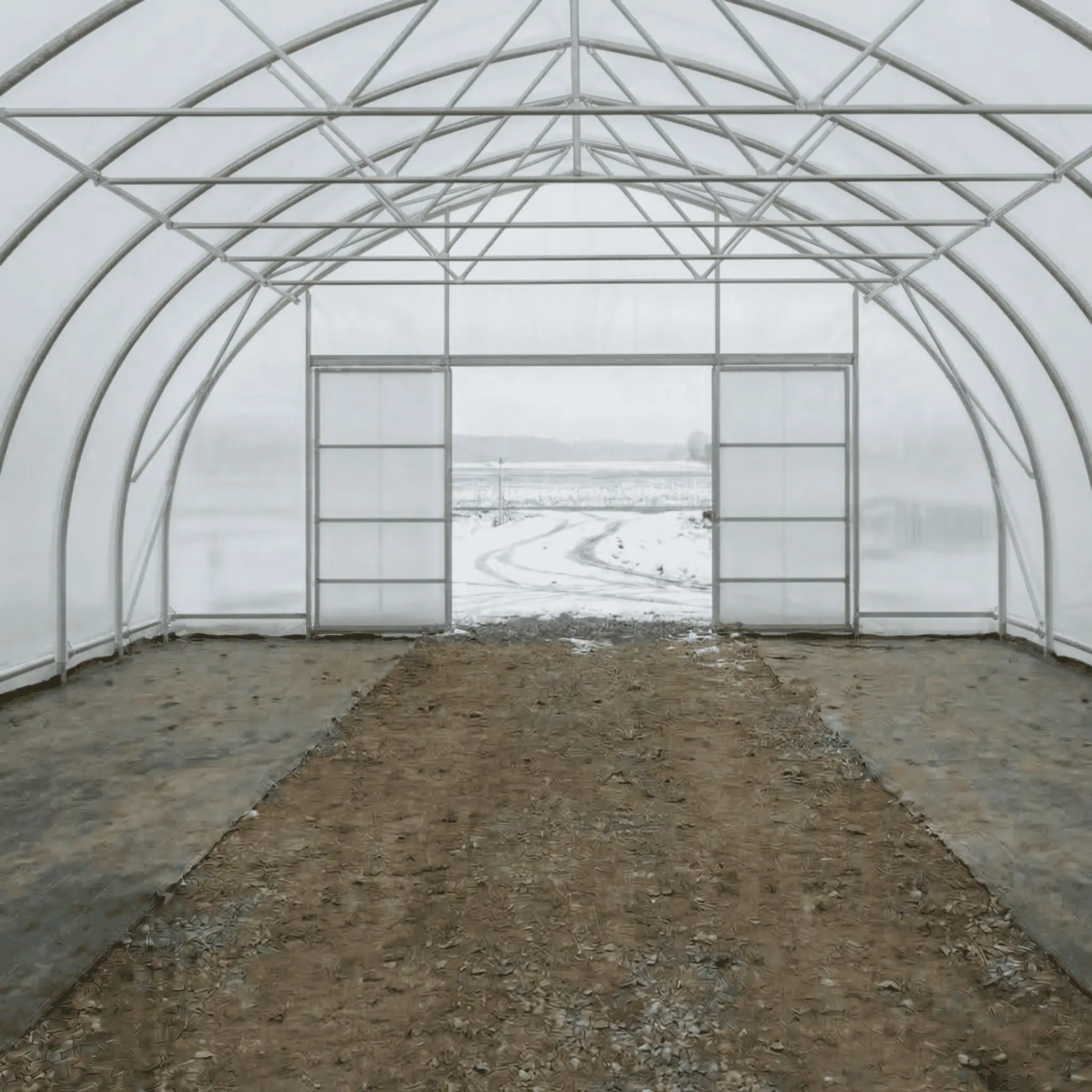
The ridge and south-facing surfaces receive the highest cumulative UV dose — inspect these areas first when assessing whether a film is approaching the end of its service life.
How climate and location affect service life
The year rating on your film is a starting point, not a guarantee. Several site-specific factors accelerate or slow stabilizer depletion — and understanding them helps you time replacement more accurately and avoid being caught off-guard by premature failure.
Northern/Overcast
Temperate
Southern / Arid
High Altitude
Beyond UV index, heat accelerates oxidation — which is why film on the south face and ridge of a tunnel degrades faster than film on the north face or side panels. If you are tracking film condition, inspect the highest-exposure surfaces first. Failure at the ridge is typically the first sign a replacement cycle is approaching.
Practical takeaways
UV stabilization is not a marketing label — it describes a genuine and well-understood chemistry that determines how long your greenhouse cover will maintain its structural integrity and light transmission. A few things are worth keeping in mind when you are evaluating or replacing film.
First, the year rating is a baseline calibrated to moderate UV conditions. Your actual service life depends on your climate, elevation, and how much direct sun the film accumulates. Use the rating as a planning horizon, not a hard expiry date, and let the physical condition of the film guide your timing.
Second, the additives beyond UV stabilization matter for crop performance even if they do not affect longevity. Anti-drip treatment, thermal IR management, and diffusion properties all affect what happens inside the tunnel every day. When choosing between films with similar year ratings, the additional specifications are worth reading.
Third, inspect the high-exposure surfaces — the ridge, the south-facing panels — annually from the midpoint of the film's rated life onward. Early signs of chalking or brittleness give you a full season to plan and schedule replacement rather than dealing with a failure under load in February.
Questions about which film specification makes sense for your structure and climate? The Canadian and US Snow Load Calculators give you the regional context on winter severity — and the same regional factors that drive snow load also correlate with the UV environment your film will face.