Why Greenhouses Work: The Science of Trapped Heat
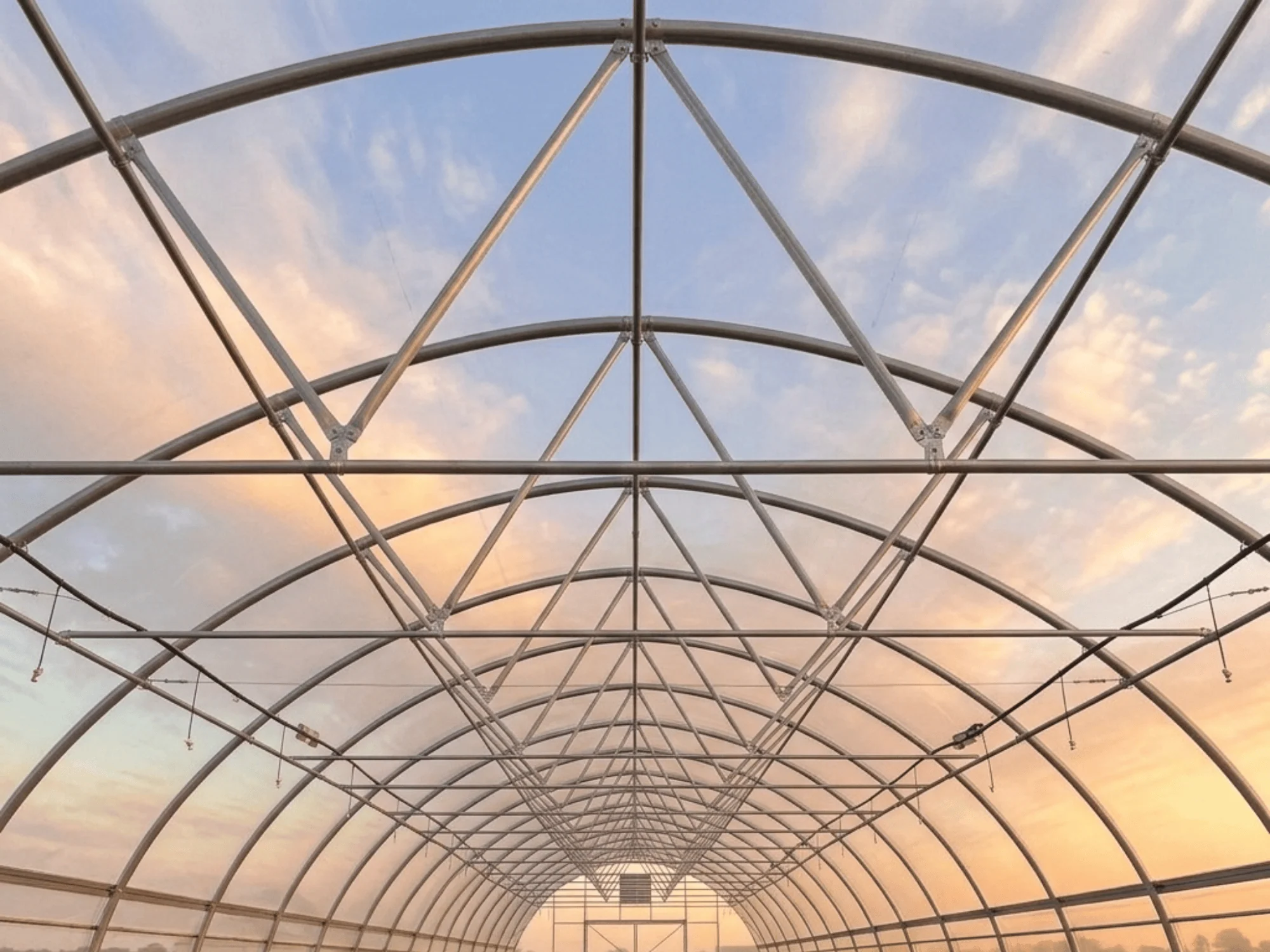
It is not magic, it is physics. The cover is doing more work than most growers realize.
It is not magic, it is physics. A quick look at what actually keeps a tunnel warm when the temperature drops outside.
Most growers know that a greenhouse keeps things warmer than outside. Fewer know exactly why. And understanding the mechanism — even at a basic level — actually helps you make better decisions about your setup, your cover material, and how you manage heat through the season.
Here is the short version: the sun sends energy in. Your cover lets it in but makes it harder to get back out. Everything inside gets warmer. That is the whole trick. But the details of how that works are more interesting than you might expect.
Step one: shortwave radiation comes in
The sun emits energy primarily as shortwave radiation — visible light and near-infrared. Poly plastic and polycarbonate are both largely transparent to these wavelengths, which is why you can see through them and why light reaches your crops. Most of that solar energy passes straight through the cover as if it was not there.
Once that shortwave energy hits the soil, the plants, the benches, the water in your drip lines — anything solid or liquid inside the tunnel — it gets absorbed and converted into heat. The interior warms up. So far, nothing unusual.
Step two: longwave radiation cannot get back out
Here is where it gets interesting. When warm objects release heat, they do it as longwave infrared radiation — a completely different wavelength than what came in. And poly plastic, it turns out, is not nearly as transparent to longwave infrared as it is to visible light.
So the energy comes in as shortwave, gets converted to heat inside, tries to escape as longwave — and the cover blocks a significant portion of it. The heat stays inside. That is the greenhouse effect, and it happens whether the outside temperature is 15°C or -15°C.
Fun fact: This is also why greenhouses can overheat so quickly on sunny days even when the outside air is cool. The cover is doing its job almost too well — letting solar energy in all day and holding it in. On a clear spring morning that starts at 5°C outside, interior temperatures can reach 35°C or higher by midday without proper ventilation.
How your cover material affects the equation
Not all cover materials trap heat equally. The two most common options — 6-mil poly plastic film and twin wall polycarbonate sheeting — behave differently, and the difference matters most in cold-climate growing.
| Property | 6-mil Poly Plastic | 6mm Twin Wall Polycarbonate |
|---|---|---|
| Light transmission | ~88% | ~80% |
| U-value (heat loss) | ~6.2 W/m²K | ~3.6 W/m²K |
| Insulation | Single layer — minimal | Twin wall air channels — significant |
| Best for | Solar gain, season extension, cost efficiency | Cold climates, year-round growing, heat retention |
| Lifespan | 4 – 6 years typical | 10+ years |
Poly plastic wins on light transmission — more raw solar energy makes it through, which means more heat generation on sunny days. Polycarbonate wins on insulation — the twin wall construction creates enclosed air channels that dramatically reduce how much heat escapes back out at night. Neither is universally better. It depends on your climate and what you are growing.
The second-layer trick
If you want more insulation from your poly cover without switching to polycarbonate, adding a second layer of poly with an air inflation pump between them is one of the most cost-effective upgrades in commercial greenhouse growing. The dead air space between the two layers acts as an insulating buffer, dropping the effective U-value from roughly 6.2 down to around 2.0 — close to what twin wall polycarbonate delivers, at a fraction of the material cost. The pump itself runs continuously on very low wattage and keeps the two layers pressurized and separated.
Why ventilation is part of the same physics
Because the cover is trapping heat so effectively, managing when and how you release it is just as important as keeping it in. Roll-up side vents and sliding end doors on a poly tunnel give you direct control over that balance — opening them creates a pressure differential that pulls hot air out and draws cooler outside air in. This is passive ventilation, and it works because of the same physics that heated the tunnel in the first place.
When passive ventilation is not enough — in midsummer or in a particularly sunny spring — shade cloth laid over the exterior of the cover reduces the amount of shortwave radiation that enters in the first place. It does not block heat from escaping; it reduces how much heat the tunnel generates. That is a different tool for a different problem, and knowing the difference helps you use both effectively.

Intake and exhaust fans give you active control over the same heat that the cover is working to retain.
What this means for how you manage your tunnel
Once you understand that the cover is selectively trapping wavelengths rather than just acting as a windbreak, a few practical things start to make more sense. Black landscape fabric on your beds absorbs shortwave radiation aggressively and re-emits it as heat at ground level — which is exactly where your root zone needs it. Drip irrigation laid under that fabric stays warmer than exposed lines. Misting systems running in summer are cooling the air through evaporation, not adding warmth — they work against the greenhouse effect on purpose.
The structure itself is just a frame. It is the cover — and the wavelength physics happening across it — that makes a greenhouse a greenhouse.
Want to see it in 3D? Our 3D Greenhouse Configurator lets you walk through the interior of a 50-foot or 100-foot tunnel before you buy — useful for thinking through cover choices, vent placement, and bed layout relative to the structure.